On Monday, the 63rd Annual Meeting and Exposition of the American Society of Hematology came to an end. The hybrid model worked for the most part. Like any live event, there were technology hiccups here and there.
Here are my five takeaways from the meeting.
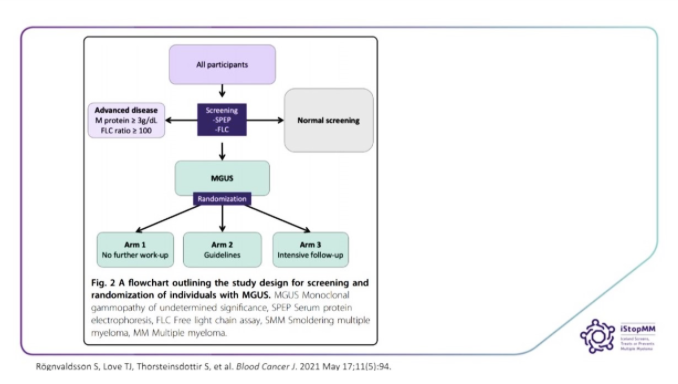
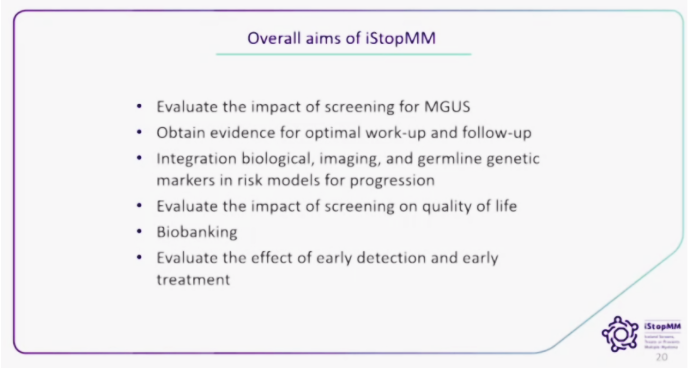
Screening for myeloma will become the future. The iStopMM (Iceland Screens Treats or Prevents Multiple Myeloma) team had four live presentations related to smoldering multiple myeloma (SMM) that indicated about 0.5% of the Iceland population has the precursor condition called monoclonal gammopathy of undetermined significance (MGUS); those who were screened did not have an increase in psychological distress. However, primary investigator Dr. Sigurdur Kristinsson (Professor of Hematology — University of Iceland) insisted that we should wait until after the data matures in a few years before making screening standard of care.
The era of immunotherapy is here. With cilta-cel showing a near 100% overall response rate, and with the deepening of the stringent complete response (sCR) from year one to year two, as well as various B cell maturation antigens (BCMAs) and antibody drug conjugates (ACDs) showing significant response rate for highly refractory patients, it is my hope that they will be approved and will be made available to myeloma patients.
CD38 antibody quadruplets will become the standard of care. For newly diagnosed patients, multiple studies have shown that the addition of CD38 drugs such as DARZALEX® (daratumumab) and SARCLISA® (isatuximab-irfc) have shown a higher rate of sustained minimal residual disease (MRD) negativity with minimal increased toxicity.
MRD adopted therapy is more significant than ever before. While MRD adopted therapy is not yet the standard of care, patients are waiting for it to be. Myeloma patients are living longer and longer, thanks to newer drugs coming to the market. It is also important to note who will benefit from a drug holiday and who will benefit from a more intense treatment.
Address the needs of ultra high-risk patients. The needs of ultra high-risk patients continue to be significantly unmet, especially for those with progressing myeloma despite going through the best treatments. I encourage those who are in this risk category to seek clinical trials, and those who are in a position to design clinical trials to work with urgency to address these needs.
Stem cell transplant is here to stay. Despite challenges faced in terms of benefits vs. risks, stem cell transplant continues to be a part of the myeloma arsenal.
While ASH may be officially over, we have several post-ASH meetings coming up! Check out https://myeloma.org for details.
December 13, 2021 – Today was the final day of ASH but it was still full of information, and to be honest, I’m a bit brain-fried. The day began with the IMWG Conference series (with the replay available on the IMF website). I jotted a few quotes that I found interesting:
IMF Chairman of the Board Dr. Brian G.M. Durie noted that he expects “mass spec will be rolled out in the next year or so.” We’ll see it as a blood test called “Exent” from The Binding Site, which designed the original free light chain test. For many, the results on Exent may be used instead of minimal residual disease (MRD) testing via a bone marrow biopsy.
Dr. Thomas Martin (UCSF Helen Diller Family Comprehensive Cancer Center — San Francisco, CA) remarked: “We at UCSF are considering 4-drug therapy Griffin (dara + RVd) to be the new standard of care for transplant-eligible multiple myeloma patients, pending insurance coverage for the dara.”
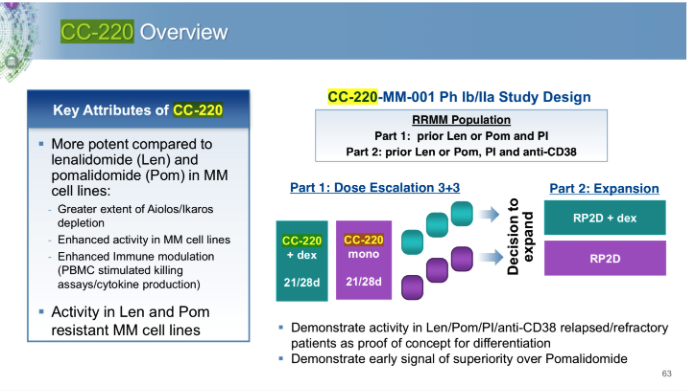
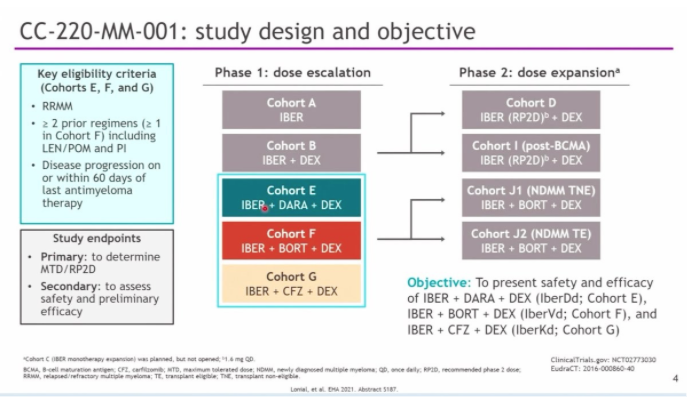
Dr. Maria-Victoria Mateos (University of Salamanca — Salamanca, Spain) commented: “CELMoDs such as iberdomide will replace immunomodulatory drugs (IMiDs) Revlimid® (lenalidomide) and Pomalyst® (pomalidomide).”
Dr. Martin: “We’ve seen poor responses to the COVID-19 vaccine for patients on anti-B cell maturation antigen (anti-BCMA) and anti-CD38 treatments, but some patients have efficacy after their booster shot. Stopping CD38 treatment for a period of time doesn’t appear to improve booster benefit.”
And now for a few of my takeaways from today’s ASH (all treatments for relapsed/refractory multiple myeloma (RRMM) patients unless otherwise noted:
Dr. Jonathan Kaufman (Winship Cancer Institute, Emory University — Atlanta, GA) presented early results from a trial comparing venetoclax plus dara and dexamethasone (VenDd) vs Velcade®(bortezomib) plus dara-dex (VenDVd) for RRMM and found an overall response rate (ORR) improvement of 20+ points (87% vs 63%) [817]
This study examined outcomes of RRMM patients (pts) following treatment of bispecific antibodies and concluded for N=57 pts that getting another T cell directed therapy significantly improves median progression free survival (PFS) (mPFS:19 vs 2 months) and OS (NR vs 12 mos) [821]
For clinical trials, it was proposed that PFS and QoL measures be co-primary endpoints rather than just PFS since many MM patients favor one over the other. [836]
Dr. Sham Mailankody (Memorial Sloan Kettering —Commack, NY) presented another CAR T study of MCARH109 that targets GPRC5D (not BCMA) and CD3, and eligible patients included those with prior BCMA therapy (inc CAR T as well as allo-SCT). N is small at 16 but 69% had ORR (inc 25% CR) with similar ORR for prior BCMA/CAR T. [827]
For N=55, this bispecific called elranatamab from Pfizer achieved 69% ORR at the recommended phase 2 dosage (RP2D) [895]
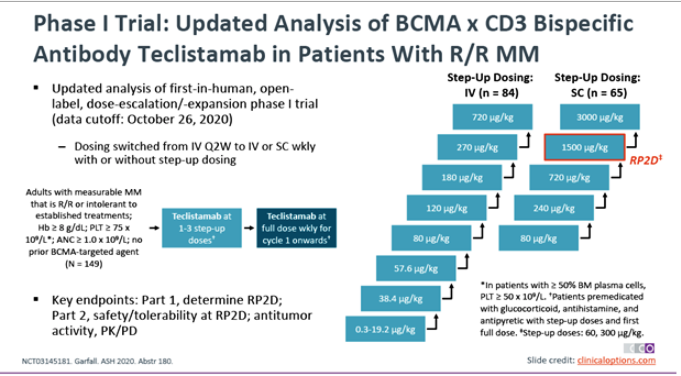
Dr. Philippe Moreau (University Hospital — Nantes, France) presented results of teclistamab, another bispecific, from a study called MajesTEC-1. For N=165, ORR=62%, CR=29%, 9-mos PFS = 59% and MRD- is 17% (10-6). Dosage is .06 -> .3 mg/kg, using a step-up dosing to minimize side effects such as cytokine release syndrome (CRS), which were all grade 1/2. [896]
The DREAMM-5 study showed that combining Blenrep® (belantamab mafodotin-blmf) with a T cell Co-stimulator Agonist aICOS resulted in increasing single agent Blenrep ORR from 32% to 52% without increasing side effects. [897]
Another bispecifc ABBV-383 (previously called TNB-3838) targets BCMAxCD3. For N=76 at the RP2D (40mg via IV), ORR was 81% with >= VGPR of 69%, although for triple-class refractory, ORR dropped to 53%. [900]
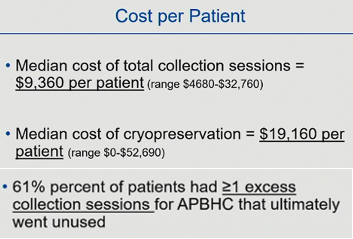
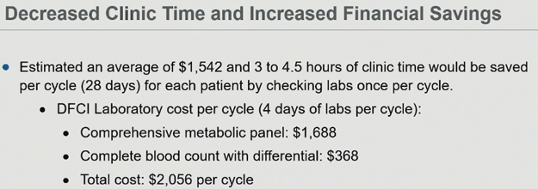
Finally, there were a couple of interesting abstracts 665 and 666 that looked at the cost of saving stem cells for a 2nd transplant and the cost /wait times for doing blood draws (CBC and chem panel) before every Velcade infusion as part of RVd treatment. At Mayo Clinic-Florida, only 2% of patients get a 2nd transplant but the cost of harvest and cryopreservation totals $8 million for all their patients (average 4 years storage). And changing protocols to perform blood draws only once per cycle can save $1,500 and 3-4 hours wait time per draw times the number of draws previously done per cycle.
Well, that’s it for 2021 ASH, although I’ll likely created a blog with my final thoughts, as well as a multipage write-up for anyone that wants it. This “virtual” hybrid platform worked for the most part, though I do miss connecting face-to-face with others. Perhaps that will happen at the 2022 ASH in New Orleans.
There are so many amazing programs available to attend at the American Society of Hematology (#ASH21) meeting. Scientific and Clinical Education spotlights, award ceremonies, poster and oral abstracts covering everything from “bench to bedside,” and beyond. Many of the sessions of interest overlap, historically making it a challenge to choose which session to attend. The virtual/hybrid model is quite handy, as it allows for people to go back and view sessions they missed.
For good reason, there is much reporting on studies looking at drug development and updates in combination therapy in myeloma. I will be reporting on some of these in my next blog. However, for this blog, I want to focus on some of the sessions not frequented based on title or content, but for some of the readers, the information may be quite relevant.
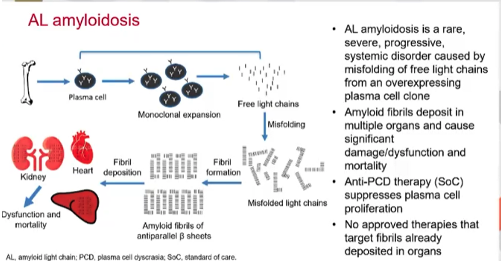
There was a presentation on Sunday, December 12, by Dr. Jason Valent (Cleveland Clinic —Cleveland, OH) in the 653 session: Myeloma and Plasma Cell Dyscrasias: Clinical-Prospective Therapeutic Trials; treatment of NDMM and amyloidosis patients. The topic of interest was a drug in development for light chain amyloidosis (AL). The current available treatment approach is to stop the production of light chains that deposit into tissue by using chemo- and immuno- therapy to prevent further tissue damage.
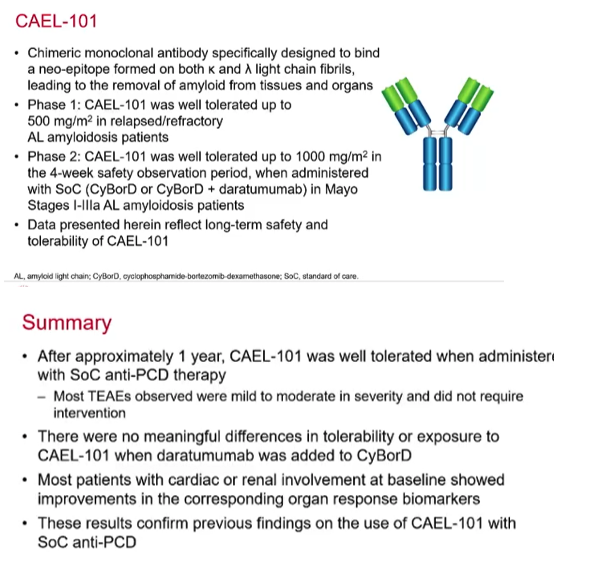
However, this does not remove the deposits and damage already created. This monoclonal antibody targets fibrils already deposited, binds to a neo-epitope — leading to the removal of fibril deposition. It’s VERY exciting to take a dual approach to treating this nasty plasma cell disorder. Dr. Valent valiantly expressed that this monoclonal antibody is “incredibly safe” – the cardiac safety profile was exceptional, and the addition of dara did not alter pharmacokinetics of CAEL-101.
468 Safety and Tolerability of CAEL-101 in Combination with Anti-Plasma Cell Dyscrasia Therapy in Patients with AL Amyloidosis: 1-Year Results from an Open-Label Phase II Trial (Dr. Jason Valent, Cleveland Clinic)
On Monday, December 13, there were two presentations in the 902. Health Services Research—Lymphoid Malignancies: Cost of Care & Cost Effectiveness session that really caught my attention. They both have the potential for “real-clinic” impact, both in saving money and patient time.
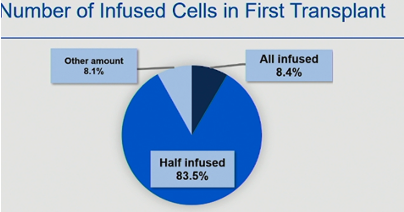
Paper Number:665 Trends in Utilization of Stored Cryopreserved Autologous Peripheral Hematopoietic Cells (APBHC) Intended for a Second (or beyond) Autologous Hematopoietic Cell Transplantation (AHCT) in Patients with Multiple Myeloma (MM): A Single Center Experiencepresented by Dr. Farah Yassine, MD,MSc (Mayo Clinic — Jacksonville, Florida)
Dr. Yassine did a retrospective review of cryopreserved (stored) stem cell collection usage at Mayo Clinic-Florida from 2010 to 2019. Nearly 92% of patients who underwent stem cell collection and first transplant had cells in storage for a possible second transplant.
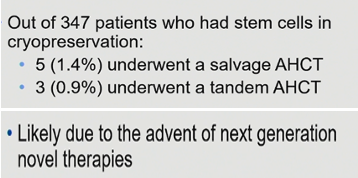
However, usage for a 2nd transplant has continually decreased.
The financial and time expenditure for cryopreserved cells was estimated.
There was a good discussion following this presentation. It was noted that this is one center’s analysis for cost, and that the cost of prolonged storage is absorbed by the medical institution. In the era of CAR T therapy and related cytopenias, stored stem cells may have greater utilization. However, as CAR T moves earlier in the treatment sequence, cytopenias may not be as much of an issue.
Again, it was noted, this is discussing stem cell storage for a second (salvage) transplant, not a delayed or planned tandem transplant. Likely, only one transplant will ever be performed and additional collection for multiple delayed transplants is not needed. This has potential for time and cost savings.
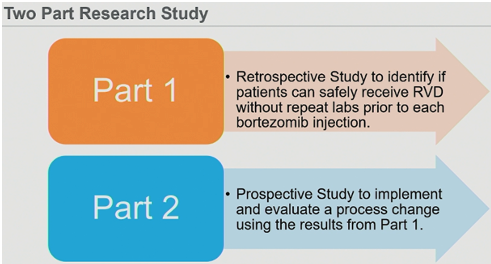
This was followed by Paper Number 666: Decreasing Costs and Clinic Wait Time While Maintaining Safety for Patients Receiving Lenalidomide, Bortezomib, and Dexamethasone (RVD) for Multiple Myeloma, presented by Eno Inyang, PharmD (Dana-Farber Cancer Center — Boston, MA).
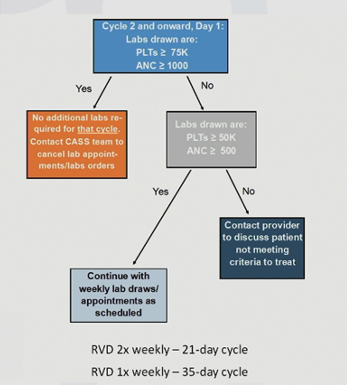
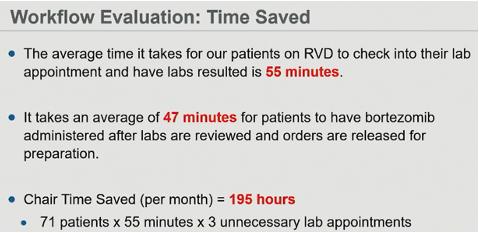
For those of you who have received VELCADE® (bortezomib), REVLIMID® (lenalidomide) and dexamethasone (VRd) therapy, you are familiar with the weekly (or twice a week) routine – go to the lab, wait to be called; get blood drawn, wait for results; go to infusion center, hope the results have been received and reviewed; then finally, get your Velcade injection. And how often do those results impact your ability to get your Velcade injection, and what cost (time/money) is this to you? This study looked at exactly these concepts:
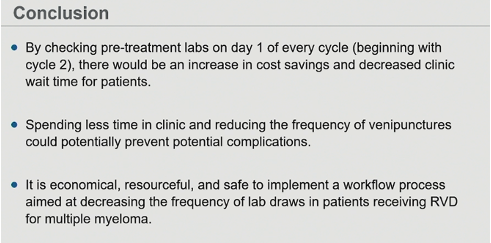
It is well-known that people can experience decreased neutrophils in absolute neutrophil count (ANC) and platelets from VRd therapy. However, if patients had ANC>1,000 and Platelet count >75,000 on Day 1 of their cycle, additional labs prior to each dose were not needed, and would be checked with Day 1 of subsequent cycles.
They went on to validate their findings by implementing a workflow in their clinic.
Time saved – patients spend >50% of their time in clinic waiting for labs:
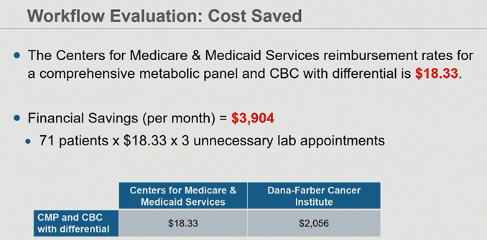
Money saved – the cost of the lab services and blood processing:
The discussion was, again, very robust after this presentation. This has real implications for time and cost savings for so many. However, as daratumumab becomes more incorporated into frontline therapy (Abstract #79: GRIFFIN Trial, Dara+VRd, presented by Dr. Jacob Laubach, Dana-Farber Cancer Institute — Boston, MA), additional analysis will be needed.
I continue to sift through the wealth of information provided at the 63rd annual ASH meeting. As discussed in my Pre-ASH blog, I want to review the “one-off” aspects of myeloma (such as high-risk components and extramedullary disease) and capture these in my next post.
Thanks for reading. Please follow me and the other support group leaders on social media.
Teresa Miceli, RN BSN OCN Myeloma Nurse Navigator, Mayo Clinic – Rochester IMF Nurse Leadership Board Rochester MMSS, Facilitator
What an amazing time it has been at ASH! #ASH21 #IMFASH21
It was great to see the new trials, updates, and options that are available – or at least soon-to-become available. There was something for almost everyone along their myeloma journey – from monoclonal gammopathy of undetermined significance (MGUS), to smoldering multiple myeloma (SMM), to active myeloma.
How wonderful to see the passion and interest from those within the medical community! I am so thankful for their dedication to find treatment options, protocols, and guidance for those of us with myeloma.
It was also great to get some updates on the vaccines, COVID-19, and myeloma. With new data coming out on many questions that we have had over the past few years, this new information is highly appreciated. For example, it was amazing how the third vaccine shot really made an impact to some of the patients. I truly appreciate all the research being done so that we can try to make the best decisions for ourselves and our families with the information that’s currently available.
I want to thank the IMF for the opportunity to participate in ASH. I also want to thank the IMF and ASH for the virtual component. I feel that I gleaned just as much out of ASH virtually as I would have in-person. I hope that ASH continues to explore the virtual platform for years to come. Virtual attendance makes ASH accessible to everyone – not just to those who are able to travel.
I look forward to sharing these new updates and educational/informational updates with the MM Families Virtual Support Group! I think that to be able to absorb and process all this information, I will go back to the beach and enjoy the blessings of the day— including the hard work and effort that so many dedicated people are making for those with myeloma. Thank you!
I was going to write something insightful – my biggest takeaways – from the last two days of the 63rd annual meeting of the American Society of Hematology (ASH) meeting. I started saying that:
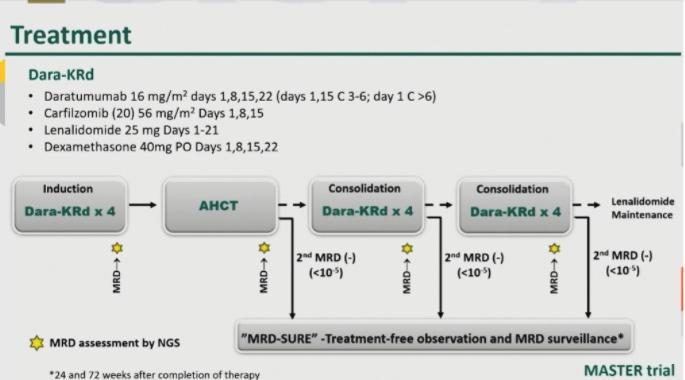
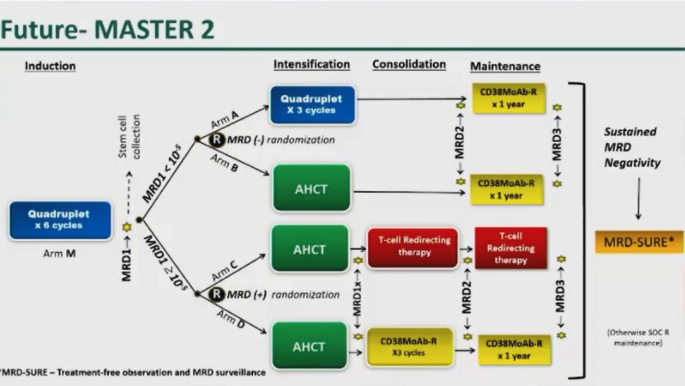
the MASTER trial was very patient-centric; it had over 23% African Americans enrolled in the trial, the MRD response adopted treatment secession strategy is innovative, the trial enrollment was enriched and powered for high-risk patients, and the MASTER-2 trial design is future-looking, the result of
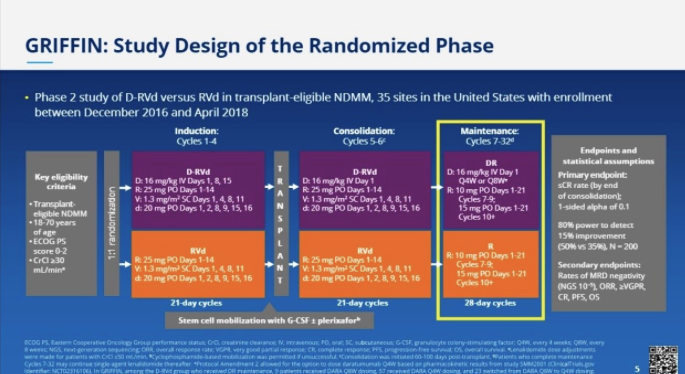
the GRIFFIN trial could be setting quadruplet (dara-RVd) standard of care for high-risk patients in those countries where dara is approved and can afford it
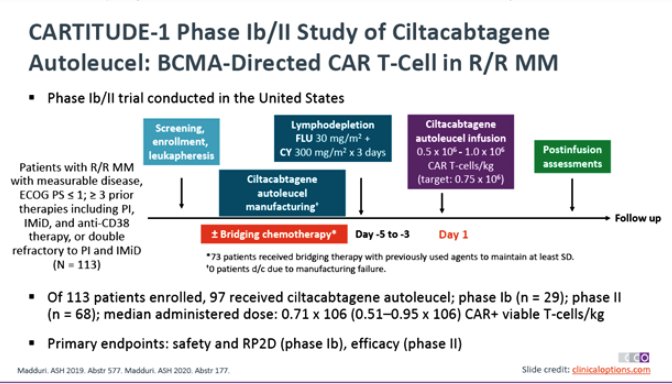
the near 100% ORR, deepening stringent complete response (sCR) at year 2, results of CARTITUDE-1 are going to be game-changing and an indicator that myeloma has indeed entered the era of immunotherapy
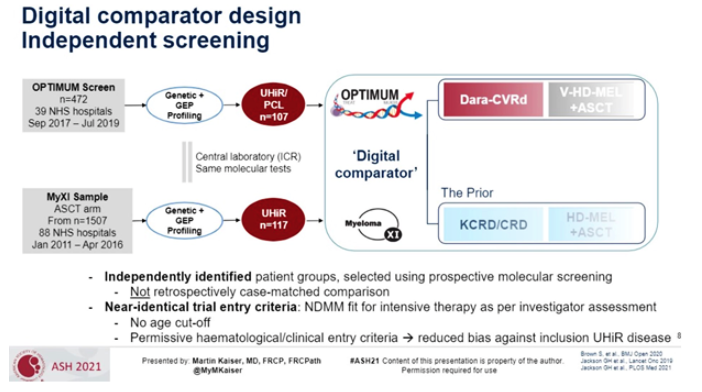
the OPTIMUM data showed the benefit of adding a CD38 to a quadruplet for those prospectively identified as having ultra high-risk disease by gene expression profile (GEP)
Then I said, what were the drugs in the GRIFFIN trial again, and what are the randomization criteria for those trials with one? That is when I pivoted to collecting the trial design in one place for some of the clinical trials presented or referenced at #ASH21. Below is a non-exhaustive list of trial designs for us clinical trial mortals. In no particular order:
OPTIMUM [Daratumumab, Cyclophosphamide, Bortezomib, Lenalidomide, Dexamethasone (Dara-CVRd), V-Augmented Autologous Stem Cell Transplant (V-ASCT) and Dara-Vrd Consolidation in Ultra-High Risk (UHiR) Newly Diagnosed Myeloma (NDMM) and Primary Plasma Cell Leukemia (pPCL) Compared with Myeloma XI/XI+ Trial Treatment for Uhir MM: The UK Optimum/Muknine Trial (Clinically Relevant Abstract)]
MASTER [Daratumumab, Carfilzomib, Lenalidomide, and Dexamethasone (Dara-KRd), Autologous Transplantation and MRD Response-Adapted Consolidation and Treatment Cessation. Final Primary Endpoint Analysis of the Master Trial]
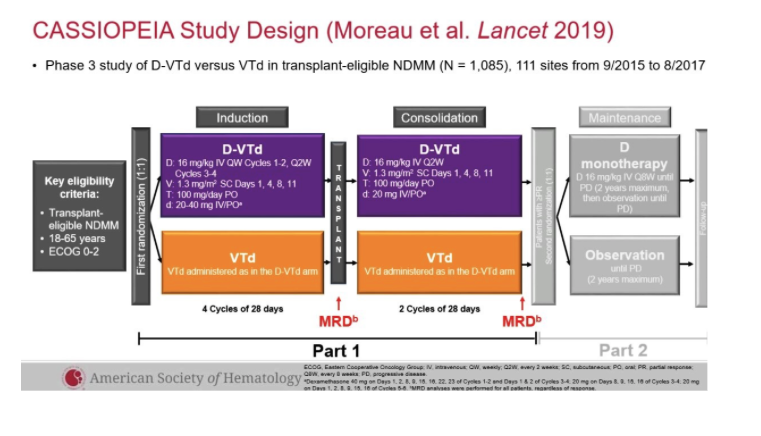
CASSIOPEIA [Daratumumab (DARA) with Bortezomib, Thalidomide, and Dexamethasone (VTd) in Transplant-Eligible Patients (Pts) with Newly Diagnosed Multiple Myeloma (NDMM): Analysis of Minimal Residual Disease (MRD) Negativity in Cassiopeia Part 1 and Part 2]
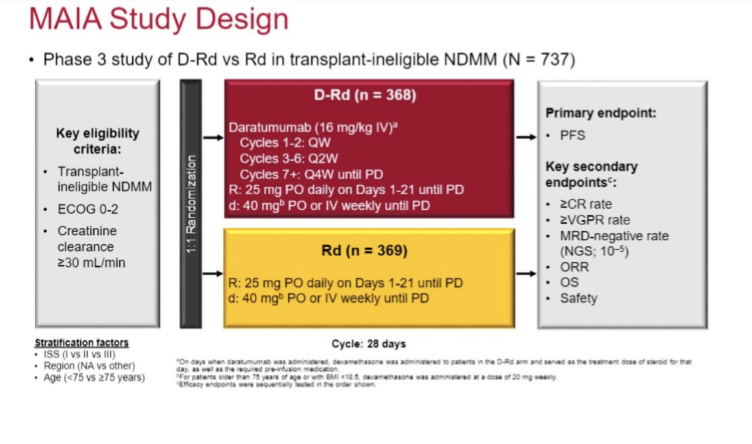
MAIA [Daratumumab, lenalidomide, and dexamethasone versus lenalidomide and dexamethasone alone in newly diagnosed multiple myeloma (MAIA): a randomized, open-label, phase 3 trial]
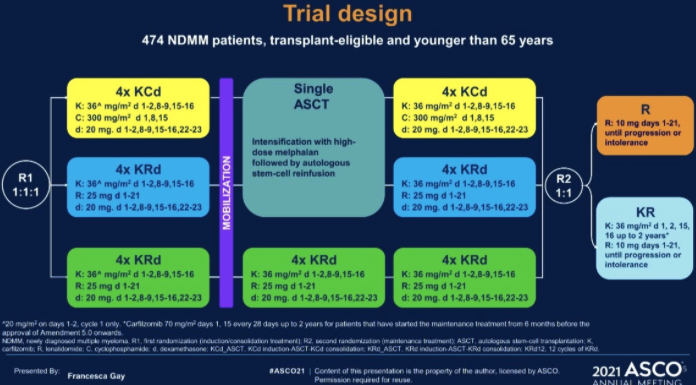
Forte [Evaluation of the Safety and the Efficacy of Carfilzomib Combined With Cyclophosphamide and Dexamethasone (CCyd) or Lenalidomide and Dex (CRd) Followed by Autologous Stem Cell Transplant (ASCT) or 12 Cycles of Carf Combined With Dex and Len for Patients Eligible for ASCT With Newly Diagnosed Multiple Myeloma]
GRIFFIN [Study Comparing Daratumumab, Lenalidomide, Bortezomib, and Dexamethasone (D-RVd) Versus Lenalidomide, Bortezomib, and Dexamethasone (RVd) in Subjects With Newly Diagnosed Multiple Myeloma]
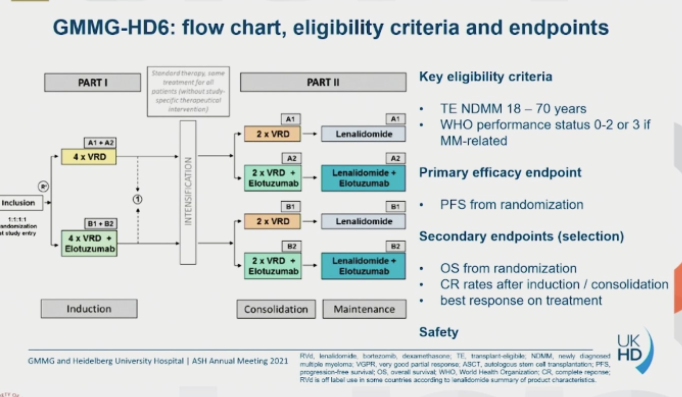
GMMG-HD6 A Phase III Trial on the Effect of Elotuzumab in VRD Induction /Consolidation and Lenalidomide Maintenance in Patients With Newly Diagnosed Myeloma (GMMG-HD6)
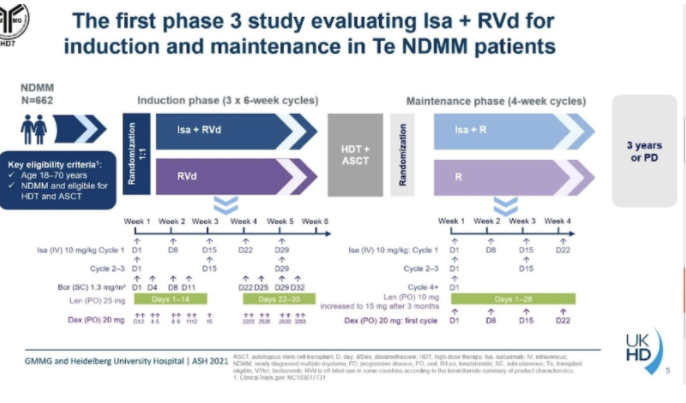
GMMG-HD7 Trial on the Effect of Isatuximab to Lenaliodomide/Bortezomib/Dexamethasone (RVd) Induction and Lenalidomide Maintenance in Patients With Newly Diagnosed Myeloma (GMMG HD7)
CARTITUDE-1 A Study of JNJ-68284528, a Chimeric Antigen Receptor T Cell (CAR T) Therapy Directed Against B-Cell Maturation Antigen (BCMA) in Participants With Relapsed or Refractory Multiple Myeloma. Please note there are now CARTITUDE-2, 3, 4, and 5 in progress. You can read about them at clinicaltrial.gov site
CC-220-MM-001 [Iberdomide (IBER) in Combination with Dexamethasone (DEX) in Patients (pts) with Relapsed/Refractory Multiple Myeloma (RRMM): Results from the Dose-Expansion Phase of the CC-220-MM-001 Trial]
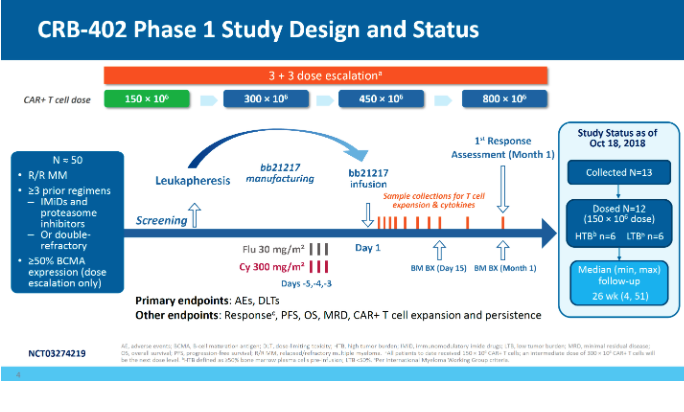
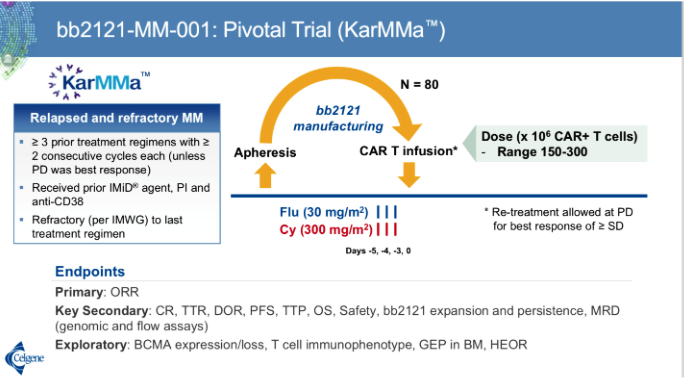
Bb21217 [Study CRB-402 a BCMA-Targeted CAR T Cell Therapy, bb21217 is a 2-part, non-randomized, open label, multi-site Phase 1 study of bb21217 in adults with relapsed/refractory multiple myeloma (MM). KarMMa is the bb2121-MM-001, the original bb2121 study]
MajesTEC-1 (Phase 1/2 Study of Teclistamab, a B-Cell Maturation Antigen x CD3 Bispecific Antibody, in Relapsed/Refractory Multiple Myeloma)
iStopMM [A Nationwide Phase 2 Trial of Patients With Smoldering and Active Multiple Myeloma (MM) (iStopMM)]
I hope this list of clinical trial design in one place will be helpful for patients, advocates, and those who don’t always speak myeloma.








You must be logged in to post a comment.