As I’m writing my last blog for ASH 2021, I am inspired to write about the topics that stoked my fire. You know, the ones that were a gut check, the ones that I couldn’t stop thinking about, the ones that I felt deep down in my soul —topics that I feel are ones to provoke deep thought and subsequent action. This is not to say that the scientific research, new data, amazing advancements, and hard work that the 879 myeloma-related abstracts aren’t of utmost importance —they are, and they will continue to guide the future of research in myeloma for years to come.
As an oncology nurse, my focus always seems to home in on the patient’s quality of life. The pure definition of quality of life is the standard of health, comfort, and happiness experienced by an individual or group. To fully understand how oncology care affects a patient’s quality of life, as providers, we must put ourselves in their shoes. What would matter to us? What would be a game-changer and what would be non-negotiable for us? What would be acceptable?
This is why words matter. In the oncology world, we throw around words and phrases that aren’t meant to be maleficent or to bring negative connotations to patients but can ultimately do so. While listening to the many abstracts being presented and countless hours of discussion between providers and experts in the myeloma field, I hear many of these words or phrases and they bring a pause to my thoughts.
Again, I want to clarify, I don’t believe anything negative is ever meant when saying them, but I think of how patients must feel when we say them. The first phrase that comes to mind is “patient failed study.” Let’s examine these simple three words. Failure is defined for us early in life by test-taking in school or by letter grades on a report card.
Further in life, failure can be viewed in a more mature and scholarly way as a motivational factor for progress and the truth is, we all fail at things —it is how we recover from them that proves our steadfastness. But how does a patient feel when hearing “you’ve failed the study?” Providers don’t purposely say this phrase to hurt or affect the patient negatively. It is simply a phrase that says this is not working and we need to move on to something different. However, that’s not how it could be viewed by a patient. A patient could very much take this phrase personally and feel a strong sense of guilt and regret that they’ve done something wrong to “fail this study.”
Another phrase that I think, as a whole, needs to be changed to become a more acceptable phrase is the term, “salvage therapy.” Salvage therapy, by definition, is treatment that is given after the cancer has not responded to other treatments. Why couldn’t the words, secondary treatment, tertiary treatment, etc. be used instead? From a patient’s perspective, isn’t that a much more palatable term in an already stressful and anxiety-producing situation? How about “manageable side effect profile?”
I have a firm viewpoint that the only way that a researcher can define a drug as having a “manageable side effect profile” is by giving patients the chance to define that. Who are we, as researchers, to define what is or what is not manageable for a patient? An example that I can give is something along the lines of “only 10% of patients experienced neutropenia.” As oncology providers, we know that neutropenia can be quite severely life-changing. Necessary dietary changes, social isolation, risk of infection, anxiety about all these things, depression due to all these changes —these don’t quite seem like something that, as a patient, I would determine to be “manageable.” Let us let patients define what’s manageable, not us!
For the last few months in my support group, we’ve been examining the term, “care partner” rather than caregiver. Patients and their support both can view the term caregiver in a negative light. In my experience as an oncology nurse, care partners need care as well! The patient is not the only person diagnosed with cancer. Cancer affects everyone in the situation, friends and family alike. Patients and care partners truly do look to each other as partners in this roller coaster after diagnosis, and that’s a healthy way to view the relationship. This healthier viewpoint allows both parties to actively verbalize their emotions, let go of guilt, and communicate more effectively about their needs throughout the cancer journey.
To me, awareness can be a catalyst for change. Ignorance is not always purposeful. If making others aware of these phrases or terminology helps to motivate more thoughtful choices in the future when it comes to terminology, then our job is not in vain.
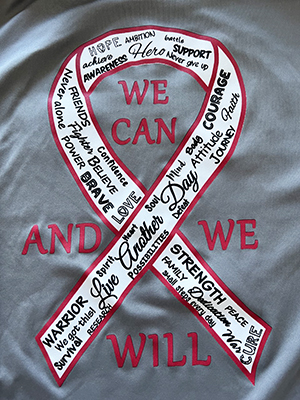
Please, as a whole, let’s do better! Let’s educate, bring awareness, be the catalyst —our patients depend on us! This picture is of a t-shirt that I designed several years ago for the MD Half Marathon Myeloma Team. I love all the words on the ribbon that truly define myeloma patients: WE CAN AND WE WILL!
As I close out this last blog for ASH 2021, I need to try to use words to explain my gratitude to the IMF and our sponsors for the opportunity to attend ASH, to represent support leaders across the country, and to bring my viewpoint to social media outlets. I feel humbled, grateful, and blessed yet these words just don’t seem enough to express my thanks. We were asked to provide one word to describe how we felt about ASH 2021. What was mine? INSPIRED.
Attending the 63rd American Society of Hematology (ASH) meeting for the first time was an illuminating experience! I feel quite privileged to be a part of the International Myeloma Foundation (IMF) team and to have this educational opportunity. This was an amazing experience and I’m so grateful! Thank you, IMF and my fellow team members!
In my Pre-ASH blog, I organized the SMM abstracts into five (5) categories. To wrap things up, it makes sense to provide highlights from those categories. In some, MGUS research had insightful findings, so those are included as well. Hold on tight — here we go!
Prevalence/demographics: The iStopMM (Iceland Screens, Treats, or Prevents Multiple Myeloma) project provides the most compelling data in this category, as they have screened about half of the Icelandic population (40 years and older). They found that 4.9% are monoclonal gammopathy of undetermined significance (MGUS) and .5% are smoldering multiple myeloma (SMM). These numbers suggest that both precursor conditions are more prevalent than previously known. This is, perhaps, not surprising since many MGUS and SMM diagnoses are incidental. The caveat to this data is that Iceland is not very diverse.
The PROMISE study focuses on a Black/African American sample as well as those with a first-degree relative who has a hematologic disorder. They found that the prevalence of MGUS was 10%, higher than expected. This study is ongoing as well, so more results will be forthcoming.
Risk identification/disease progression: Again, iStopMM has interesting findings related to disease progression, as they have followed the screened MGUS individuals (n=3487) for three (3) years. Using a randomized control trial, MGUS screened individuals were placed in one of three arms: (1) not contacted about MGUS (n=1164), (2) followed based on current MGUS guidelines (n=1159), (3) followed with more intensive diagnostics and monitoring (n=1164).
This table shows those who progressed to another diagnosis from each group:
Arm 1(n=1164)
Arm 2 (n=1159)
Arm 3 (n=1164)
Smoldering Myeloma
0
56 (4.8%)
82 (7.0%)
Multiple Myeloma
4 (.3%)
12 (1.0%)
16 (1.4%)
Other lymphoproliferative disorder
5 (.4%)
24 (2.1%)
35 (3.0%)
Total:
9 (.7%)
92 (7.9%)
133 (11.4%)
Treatments/preventing progression: Two strategies currently exist in treating SMM: one is treat to delay progression and the other is treat to cure. These trials are primarily for those with high-risk SMM, although one preliminary result was also reported among those with MGUS and low-risk SMM. MGUS and LRSMM patients are taking daratumumab, and most have demonstrated a response of some degree at this point in time. Longer follow-up is needed to provide a complete picture. The other result was that Grade 3 toxicities occurred in only 5 of 41 patients, while other minor side-effects occurred among more patients.
Findings in the high-risk area are also preliminary, but promising, with longer follow up needed. The following are being studied: (a) the 3-drug combo of ixazomib, lenalidomide, and dexamethasone designed to delay progression, and (b) the combination of KYPROLIS®(carfilzomib), REVLIMID® (lenalidomide), and dexamethasone (KRd) plus stem cell transplant designed to cure.
Disease mechanisms: Frankly, I struggled to understand much of the work in this area. But from my perspective, it seems like various markers are being investigated which can help with earlier disease identification, and I also heard remarks about further stratifying SMM patients into those who may need less frequent follow-up, those who may need closer observation, and those who should probably start treatment. Investigators are looking at things like genomic profiles, mutations, Apolipoprotein B mRNA-editing enzyme catalytic polypeptide-like (APOBEC) activity, and clonal level markers, among other things. Again, to me this was pretty complex stuff, and I hope to learn more about some of these things in the future. The possibilities do seem quite exciting, however, even to this non-biologist. (Does anyone have a Disease Biology for Dummies book I could borrow?)
COVID-19/vaccine-related information: The iStopMM project again reveals helpful information, as screened MGUS patients had similar rates of SARS-CoV-2 susceptibility and COVID-19 severity, compared to the general public. Regarding SMM patients, one study examining MM patients undergoing treatment also included a small sample of SMM patients in the “no-active-treatment” group. Since the study was focused on treatments, I didn’t see specific statistics regarding the no-active-treatment group, but the figure showed what looked like a slightly depressed response compared to the healthy control group (with no previous COVID-19), especially post dose 1 and within 10 days of receiving dose 2.
To all who have read my blogs, thank you for your interest and attention. I hope that I’ve been able to provide valuable information and insights. I also wish you the very best, in this season of hope.
“Any fool can turn a blind eye but who knows what the ostrich sees in the sand.” – Samuel Barclay Beckett
Colon cancer screening has been shown to reduce the incidence of colon cancer in the general population by identifying premalignant lesions in the colon and treating them. Can screening for elevated blood proteins impact a specific blood cancer? Multiple myeloma (MM) evolves from monoclonal gammopathy of undetermined significance (MGUS) which is completely asymptomatic.
In an attempt to cure or prevent MM, a massive screening study, the Black Swan Research Initiative (BSRI), was undertaken in Iceland. The BSRI was established by International Myeloma Working Group (IMWG) in 2012 to find a cure for MM. The study was given the acronym iStopMM (Iceland Screens, Treats, or Prevents Multiple Myeloma) and was supported by the International Myeloma Foundation (IMF).
The study initiated by Dr. Sigurdur Kristinsson (Professor of Hematology — University of Iceland) involved over 75,000 patients. Everyone over the age of 40 was recruited to participate in the study which included 140,000 individuals in Iceland. Dr. Kristinsson tasked a team of 20 investigators to screen for MGUS, smoldering multiple myeloma (SMM). Those who were diagnosed as either having MGUS or SMM would be randomized in a clinical trial to find an appropriate follow-up to determine if screening can prevent multiple myeloma and its ravaging symptoms. The iStopMM study is a randomized controlled study of identified MGUS or SMM individuals that have been grouped either by clinical monitoring or with lab monitoring to evaluate their progress. A third group will be monitored more aggressively, with more invasive tests to establish a pattern of the development of multiple myeloma.
Another study presented at ASH, known as the PROMISE study, is evaluating screening to reduce the incidence of multiple myeloma and to prevent late complications of bone and kidney disease. The PROMISE study, coordinated by Dr. Irene Ghobrial (Director, Clinical Investigator Research Program, Dana-Farber Cancer Institute — Boston, MA), looks at high-risk individuals. High-risk individuals are defined as being first-degree relatives of patients with blood cancers or African Americans who have 2-3 times greater risk of developing MM. The goal of this study is to evaluate the prevalence of MGUS in this high-risk group. In a cohort of 2,960 high-risk individuals screened, the prevalence of MGUS was found to be significantly increased.
These studies are being conducted to determine if, in the future, watchful monitoring, or offering earlier and more aggressive therapy — based on screening for MGUS, SMM, or early MM — could lead to prevention or a possible cure for multiple myeloma. What one “sees in the sand” by screening may change the course of the disease, like it has been shown for other screening initiatives.
I am so thankful and impressed with the content and variety of topics that the #IMFASH21 support group leaders are reporting through their blogs. Each brings important highlights that will be helpful in Support Group discussions.
For those who do not attend a support group, this information can be helpful to review and discuss with your healthcare team. Staying up to date on myeloma, its treatments, side effects and clinical trials is key to our futures, as we decide on next potential therapies.
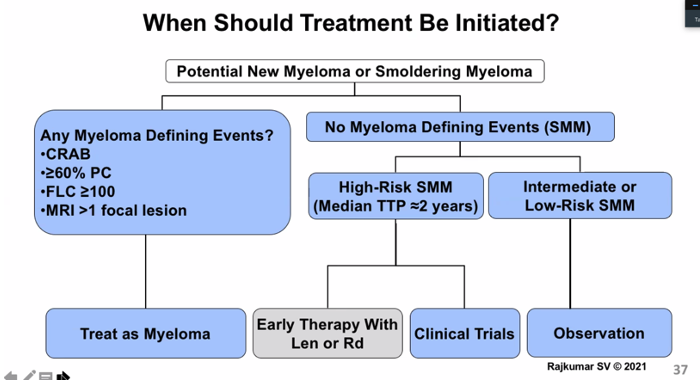
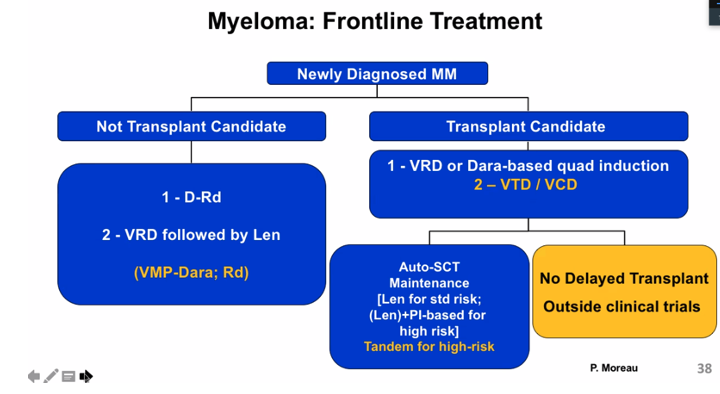
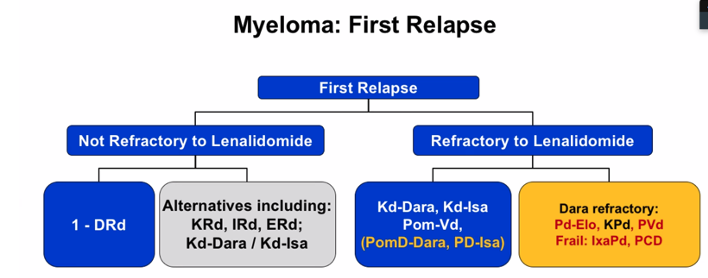
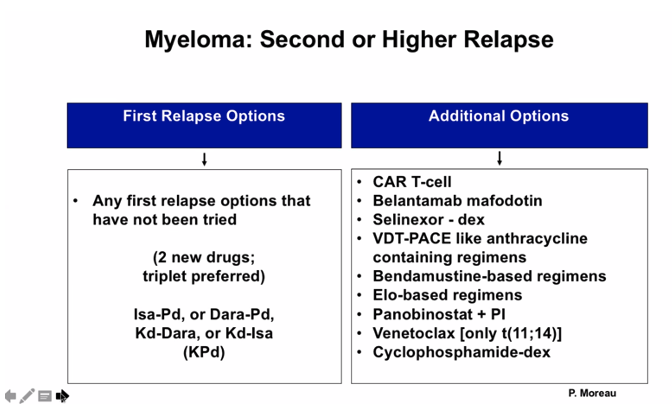
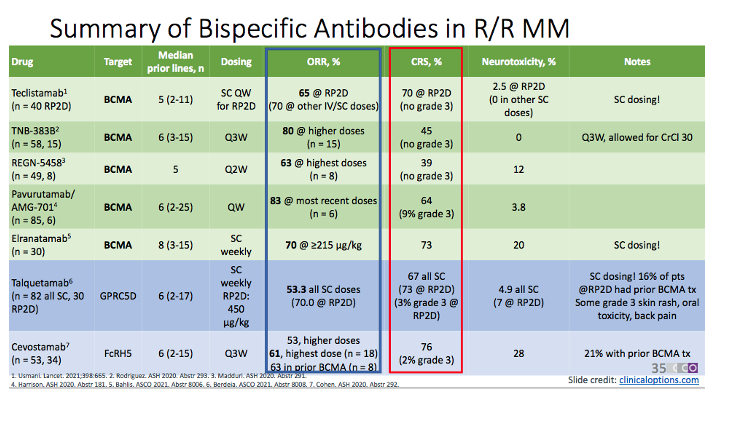
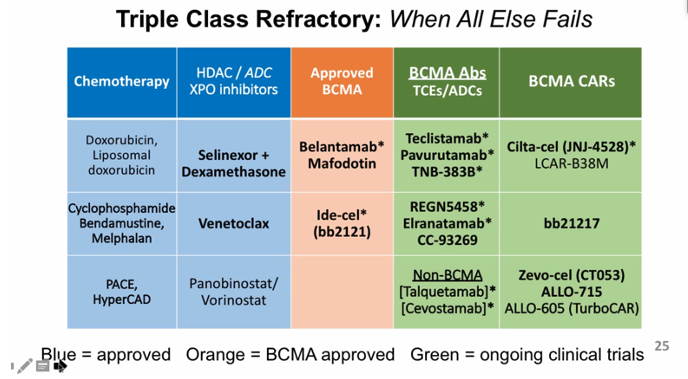
My blog today will focus on “Filling in the Spaces” of information from other leader blogs. Yelak Biru wrote an excellent blog on #ASH21 Trial Design Acronyms. Along with that, I thought it would be helpful to add the treatment algorithms below.
Please remember that these are just general recommendations, but they are a good starting point for conversations with your own healthcare team.
New Myeloma or Smoldering Myeloma:
Myeloma: Frontline Treatment
Myeloma: First Relapse
Myeloma: Second or Higher Relapse
Additional Charts that I found helpful:
On the above chart, please note that panobinostat was withdrawn by the FDA in the US but not in Europe.
These algorithms are CURRENTLY the best options to think about but as we all know, things change.
Keep learning, keep sharing, andremember — you are not alone!
More information on the myeloma support groups can be found HERE. You can also contact me at [email protected]
As I mentioned in my previous blog, “What are You Going to Fill Your Glass with?” I reviewed a variety of sessions dealing with various aspects of mental health. Almost all of them were poster sessions, which I personally like because they have such a different feel from oral presentations (at least in my field; I imagine it’s the same at ASH).
In poster sessions, posters are placed in aisles, and you get to walk around a large room with the presenters standing nearby. You can stop and chat with the presenters to ask questions and make comments. The experience is much different from the typical 3-minute Q&A session done in oral presentations.
However, virtual poster sessions consist of poster images along with submission abstracts — there wasn’t any opportunity to engage with the researchers. Nonetheless, there were some interesting projects and I’m going to highlight some of those findings in this blog.
One interesting study examined psychological distress and quality of life, along with prognostic awareness, by line of therapy in those with multiple myeloma. Regardless of the line of therapy, about a quarter of all patients demonstrated clinically significant levels of anxiety, depression, and post-traumatic stress disorder (PTSD).
While a quarter doesn’t represent a majority, it is still a high number. Furthermore, the study did not report the overlap (or lack thereof) among patients. For example, 25% of the patients could have reported all three; 25% could have reported anxiety; while a different 25% could have reported depression, etc.
This study also looked at prognostic awareness. They found that over 90% of patients felt like prognostic information was helpful in making decisions about treatment. Over 85% said that prognostic information helped with coping, as well as making future plans. While 85% indicated that their oncologist told them that their myeloma was incurable, only 42% thought it was incurable; 30% reported that they had a terminal illness.
These patients reported significantly higher depression, anxiety, symptom burden, as well as lower quality of life. The authors concluded that intervention is needed to help patients reduce distress, improve quality of life, and develop various coping strategies that can be helpful over the multiple myeloma disease pathway.
Another project explored interest in and feasibility of a lifestyle intervention program for those with myeloma. These researchers intentionally sought a diverse sample: the 38 myeloma participants consisted of 54% White, 46% Black, 54% Female, and 46% Male. The majority (55%) have not received lifestyle counseling from their healthcare team, but almost 90% were interested in a lifestyle program. Specific areas of interest included social support, guided/personalized exercise, meal preparation support, and flexibility. These results also revealed a significant gender difference in perceived emotional support, informational support, instrumental support (i.e., tangible support, like mowing the lawn or other physical tasks), and companionship, with females reporting higher support in all these areas.
Taking this intervention program support a step further, another study is in process, and is looking at the effectiveness of digital life coaching during the autologous stem cell transplant (ASCT) process. This study focuses on a specific event in the myeloma pathway (SCT) and thus has a more focused time point.
Based on a pilot, which consisted of life coaches meeting with patients digitally and connecting every 5-7 days, they are now launching a phase II trial looking at a digital life coaching program compared to typical SCT care. An interesting element of this study is that one of the outcome measures will be the use of sedative-class PIMs, such as lorazepam, temazepam, and similar medications. They will also compare patient-reported outcomes (PROs) including quality of life, emotional distress, and sleep disturbance.
The last project I want to highlight also doesn’t have results yet but has garnered a lot of attention during ASH – the iStopMM project. This project will be reporting on mental health correlates and outcomes in the future, and that data will be highly anticipated, I think!
Mental health is important. It influences how we handle stress, how we make healthy choices, how we think and feel about our lives and our relationships, and how we rely on our ability to adapt to changes and cope with challenges we encounter in everyday life. It’s encouraging to see research addressing mental health among myeloma patients!






You must be logged in to post a comment.