What an amazing time it has been at ASH! #ASH21 #IMFASH21
It was great to see the new trials, updates, and options that are available – or at least soon-to-become available. There was something for almost everyone along their myeloma journey – from monoclonal gammopathy of undetermined significance (MGUS), to smoldering multiple myeloma (SMM), to active myeloma.
How wonderful to see the passion and interest from those within the medical community! I am so thankful for their dedication to find treatment options, protocols, and guidance for those of us with myeloma.
It was also great to get some updates on the vaccines, COVID-19, and myeloma. With new data coming out on many questions that we have had over the past few years, this new information is highly appreciated. For example, it was amazing how the third vaccine shot really made an impact to some of the patients. I truly appreciate all the research being done so that we can try to make the best decisions for ourselves and our families with the information that’s currently available.
I want to thank the IMF for the opportunity to participate in ASH. I also want to thank the IMF and ASH for the virtual component. I feel that I gleaned just as much out of ASH virtually as I would have in-person. I hope that ASH continues to explore the virtual platform for years to come. Virtual attendance makes ASH accessible to everyone – not just to those who are able to travel.
I look forward to sharing these new updates and educational/informational updates with the MM Families Virtual Support Group! I think that to be able to absorb and process all this information, I will go back to the beach and enjoy the blessings of the day— including the hard work and effort that so many dedicated people are making for those with myeloma. Thank you!
Saturday at #ASH21 was a full day that began at 6:30 a.m. ET, with the #IMFASH21 team being invited to be a “Fly on the Wall” at the International Myeloma Working Group’s (IMWG) breakfast meeting. This prestigious group of over 250 global myeloma specialists meets twice a year to collaborate on projects. They form working groups, give updated status reports, produce guidelines for myeloma treatment, and decide upon new projects. At ASH, they also discuss and preview some ASH abstracts (which are embargoed until they are officially presented at ASH.)
I am both grateful and in awe at the amount of work this group does — and I mean “group.” As Susie Durie often would say: “Their egos are checked at the door,” and they come together on behalf of helping the entire myeloma community — from the general oncologists who don’t have time to come to ASH, to the patients and caregivers trying to keep up with the rapidly changing treatment paradigm. Learn more about IMWG and its guidelines/publications here.
After leaders attended the IMWG breakfast, we went directly into our schedule to view oral abstracts virtually. However, to our frustration, there were technical glitches, and we were not able to view some of the morning abstracts. But as resilient leaders, we will look to the replays. Our virtual badges give us the ability to watch #ASH21 replays until January 1.
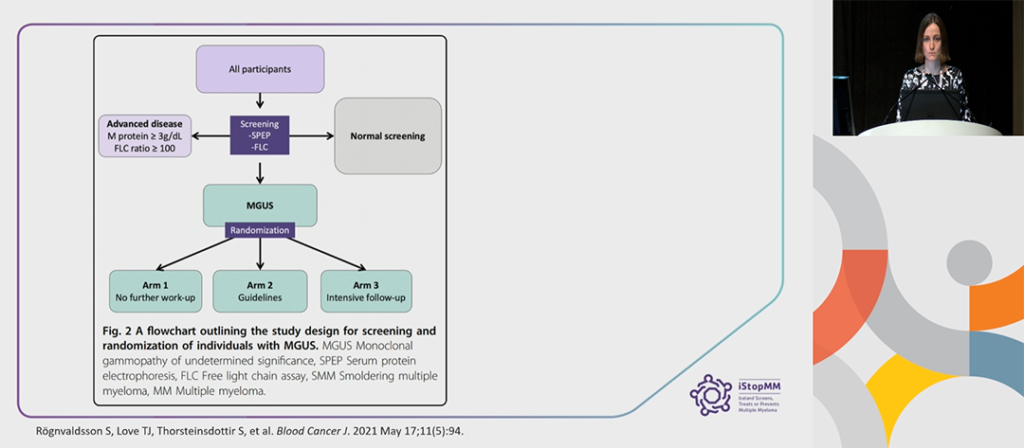
I mentioned in my pre-ASH blog that I would be reporting a bit on the iStopMM (Iceland Screens, Treats, or Prevents Multiple Myeloma) project in each of my blogs. iStopMM aims to map the epidemiological and clinical characteristics of smoldering multiple myeloma (SMM) in the general population based on a large population-based screening study.
Michael and I have been extremely interested in this project since its inception 5 years ago. This year at ASH, the iStopMM team has four oral abstracts and two posters — quite an amazing accomplishment! I listened with great anticipation, and I continue to be inspired by the results and the selflessness of the Icelandic people in their willingness to volunteer and to participate in this research! Read more in Oral Abstract 151: Prevalence of SMM: Results from iStopMM study Sigrun Thorsteinsdottir MD, Ph.D.
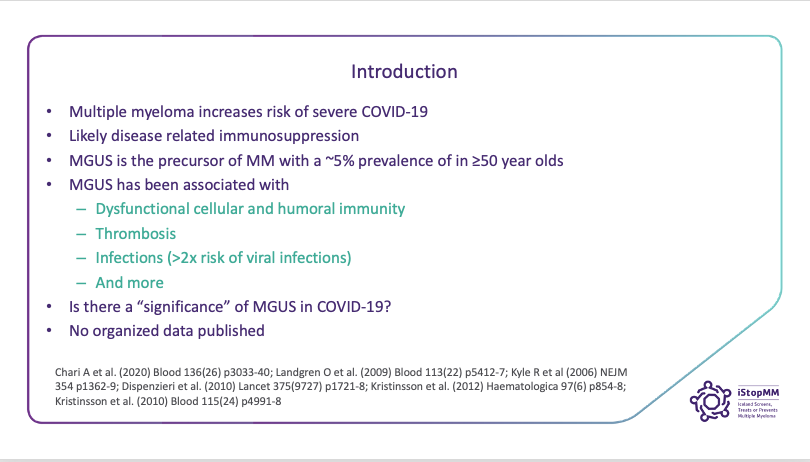
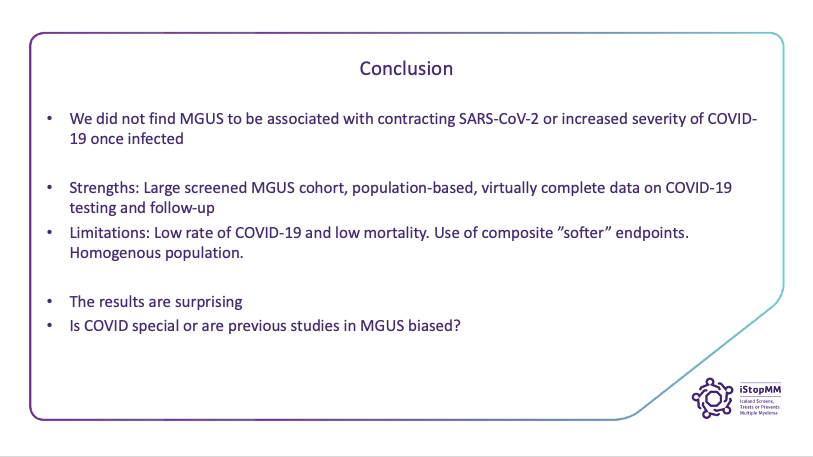
Additionally, refer to oral Abstract 154 on monoclonal gammopathy of undetermined significance (MGUS) and COVID-19 presented by Sæmundur Rögnvaldsson, MD (University of Iceland – Reykjavík, Iceland). This, of course, is of particular interest as we all learn how COVID-19 affects us. For MGUS patients in this large population-based study that included 75,422 individuals screened for MGUS, they did NOT find MGUS to be associated with SARS-CoV-2 susceptibility or COVID-19 severity. This is contrary to multiple myeloma (which is preceded by MGUS). These findings suggest that immunosuppression in MGUS differs significantly from that of multiple myeloma and is important since they can provide information for management as well as recommendations for individuals with MGUS.
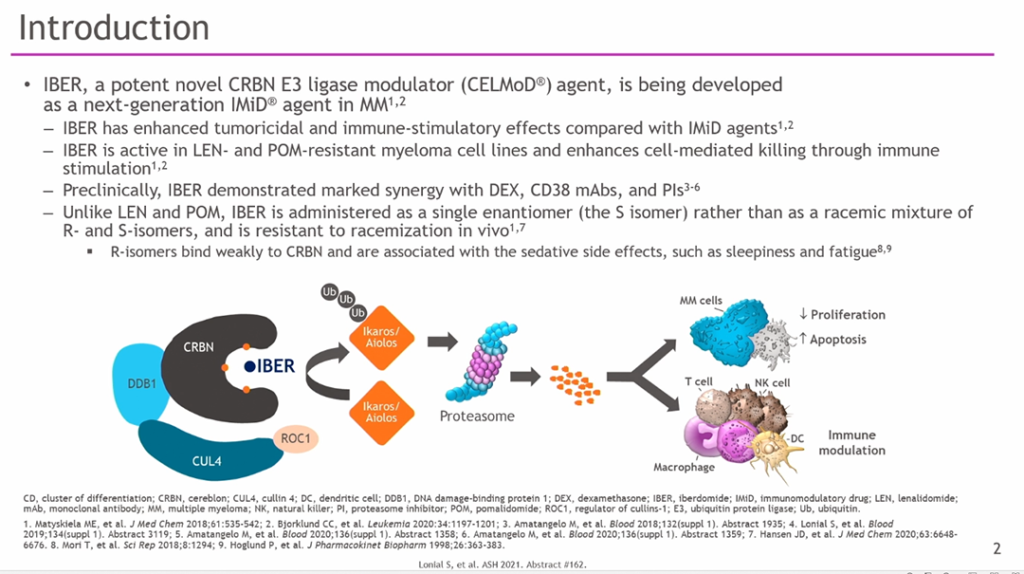
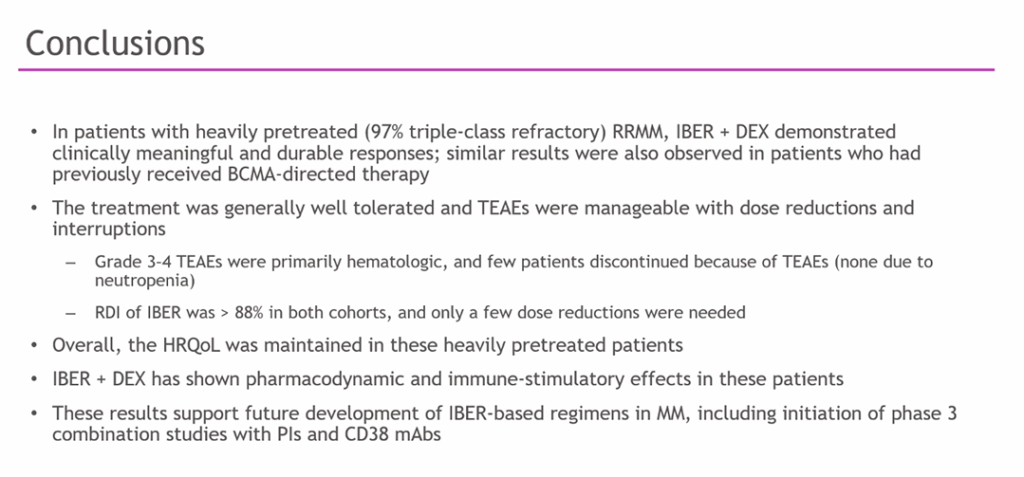
Patients were heavily pretreated with 97% triple-class refractory. For me, this was an abstract I had been looking forward to, as it is a new mechanism of action. Cereblon E3 ligase modulator
(CELMoD) is “easy” since it’s all oral. Something to share with my support group members at home that is RRMM.
Saturday was packed with excellent presentations that continue to give us hope and are getting us closer to a cure, with lots of updates on MGUS, SMM, MM, and RRMM. Please read all the other excellent blogs from the #IMFASH21 Team members. Sharing the Hope!
Thanks to all the dedicated researchers. Cheers to your continued hard work that our futures will benefit from!
What a whirlwind of information it was this weekend! #ASH21 #IMFASH21
We learned about new and exciting studies related to monoclonal gammopathy of undetermined significance(MGUS) smoldering myeloma (particularly high-risk), and then active myeloma. I am so blessed to be able to participate in these presentations and gain this new level of insight into the myeloma world.
As a current high-risk myeloma patient with two young children, I started out as high-risk IGA MGUS and then developed high-risk smoldering myeloma (SMM). However, I continue to hope for a “magic wand” (as my son says) to cure this disease. Therefore, I am writing this blog from that perspective: (1) to encourage other multiple myeloma patients and caregivers, especially those with young children; (2) to provide uplifting information; and (3) to empower those with myeloma through these new educational resources.
As a previous high-risk IGA MGUS patient who had it for almost five years, the new studies out of Iceland with the iStopMM (Iceland Screens,Treats, or Prevents Multiple Myeloma) Study showed the importance of tracking MGUS. Depending on which type of MGUS you have, MGUS may have a greater tendency to turn into active disease. The iStopMM Study demonstrates the importance of tracking the disease so that doctors can monitor who may or may not progress into a different stage. Tracking the disease at an early stage allows myeloma patients and their medical team to monitor it carefully and decide when and if to move on to doing treatment. With early detection, a person can hope to avoid certain struggles and issues that they could face without early treatment.
If a patient moves from MGUS to smoldering myeloma, wow! What choices are coming down the road! Very exciting! As a patient who went from high-risk smoldering myeloma to active myeloma within 8 months, it is so encouraging to see the latest studies that show the benefits of treatment on high-risk SMM. It used to be that many high-risk SMM patients would use the “watch and wait” approach. While that still is a viable option (as there are considerations of starting therapies), it seems that there are some great outcomes when treating high-risk SMM patients. Some studies are showing promising results by using Kyprolis® (carfilzomib), Revlimid® (lenalidomide), and dexamethasone (also known as KRd) and even KRd with a stem cell transplant. [Carfilzomib, Lenalidomide and Dexamethasone (KRd) as Induction Followed by HDT-ASCT, Consolidation with KRd and Maintenance with Rd. GEM-CESAR, paper 1829.]
If the patient then goes into active myeloma, again – I just have to say, wow! There are all sorts of options! There were a lot of presentations that added daratumumab to various drug combinations. From a non-medical standpoint, it seems that in most cases, Dara added to these various drug combinations increased the survival rates and deepened the responses. However, for some patient groups, Dara wasn’t always the “magic wand.” While Dara may still help that segment of myeloma patients, it was not as effective as it was in other groups. But overall, it was great to know about the effectiveness of the drug, and how Dara provides another available option in the treatment arsenal in this myeloma journey.
Another interesting topic point was the discussion on CAR T therapy and minimal residual disease (MRD) negativity. CAR T therapy may be another treatment option for myeloma patients that could beneficial. Again, looking at it from a lay person’s perspective, it seems that CAR T therapy has advanced and some of the side effects have gotten a bit better. The stats related to progression free survival (PFS) and overall survival is amazing! It is also exciting to see how CAR T affects MRD negativity. MRD negativity seems to be a key factor in a person’s success in their myeloma journey. It is interesting to see how CAR T continues to develop as part of the myeloma treatment plan.
One of the primary outcomes of attending ASH this weekend was gathering INFORMATION! While I may not completely understand the ins and outs of the therapies, drugs, side effects, charts, stats, and everything else (my head is still spinning!), ASH provides the latest information that allow for intelligent and meaningful conversations with the medical/treatment team.
Information allows myeloma patients to be empowered, be their own advocate, and partner with their healthcare team to help make the right decisions with current available information. By learning more about different treatment options, myeloma patients can ask questions like: Is the current treatment plan still the best approach? Are there novel advances that may work better at the current stage of myeloma? Is now the best time to hit myeloma harder? For all these questions, I have no answers. But, by learning about new treatment options and therapies, myeloma patients are empowered to talk to their doctors about options and to see if status quo is the way to go or if there are any changes that should be considered based on the new research.
I have learned so much this weekend! It was interesting to see the developments that are happening within the myeloma community. The treatments are advancing every day. Hopefully, one day, we will find that “magic wand.”
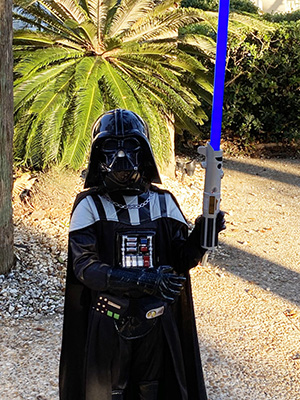
My son and what he would love to be his magic wand!
Today was another great day at ASH21, and antibodies (of course) took center stage in my choice of talks to attend.
Darzalex® (daratumumab), again, showed impressive results, this time in the ADROMENA trial for light-chain (AL) amyloidosis — a protein misfolding disease that can also occur in ~15% of multiple myeloma patients. These phase III trial results that were presented by Dr. Raymond Comenzo, MD, showed that the addition of Darzalex to Velcade/Cytoxin/dexamethasone (VCd) induction followed by Darzalex maintenance led to a 60% response rate compared to 20% in the VCd arm.
Most impressively, patients with renal or cardiac involvement showed improvements in organ function in the Dara-VCd arm. This talk was so moving to me because I lost a dear friend to AL amyloidosis years ago, which prompted me to switch my research focus to protein misfolding as a first step towards therapeutic development for protein misfolding diseases. I’m glad that there is now a good therapeutic option, at least for newly diagnosed AL amyloidosis patients.
Bispecific antibodies that targeted other sites besides BCMA have shown impressive results in preclinical and early clinical studies, offering options for patients who do not express BCMA on the surface of their myeloma cells.
Dr. Stefano Sammicheli, PhD, Director at Ichnos Sciences, presented early data on a first-in-class CD47/CD38 bispecific antibody innate cell modulator, ISB 1442. This antibody has two CD38+ epitopes that are distinct from daratumumab to bind myeloma cells as well as a CD47+ epitope to increase destruction of myeloma cells.
The preclinical data is impressive and first-in-human clinical trial enrollment is expected in mid-2022. Dr. Suzanne Trudel, MD presented data on the phase I clinical trial of another bispecific antibody, cevostamab — a FcRH5/CD3 bispecific antibody that facilitates the killing of myeloma cells. The safety profile is concerning, but a step-up dosing procedure seems to help, and it is a good option for relapsed, refractory patients who do not have an established treatment available for them.
Dr. Amrita Krishna, MD presented data on the MonumenTAL-1 Phase I study of talquetamab, a GCPRC5D/CD3 bispecific antibody that showed durable responses that deepened with time. A phase II expansion study is underway.
Additionally, Dr. Ajai Chari, MD presented results of the TRIMM-2 phase Ib study of talquetamab with daratumumab, which showed even deeper responses compared to monotherapy, with no increase in adverse effects. These data show that combination therapies with bispecific antibodies will be a promising future therapy option.
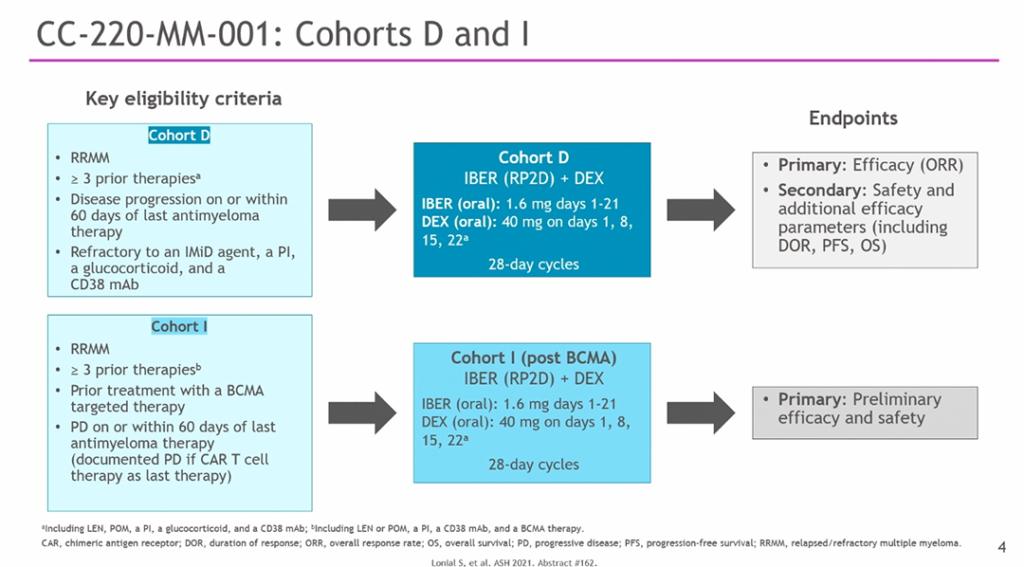
Dr. Sagar Lional, MD, FCAP gave an update on the phase 1/2 trial on iberdomide (IBER), a novel oral cereblon E3 ligase modulator (CelMoD), in combination with dexamethasone. While the overall response rate was low (26%) in this heavily pre-treated population, iberdomide is very well-tolerated with minimal side effects compared to other immunomodulators, likely because only the S isomer is administered so there are no off-target effects from the R enantiomer. The unique mode of action of CelMoDs warms this protein folder’s heart, and I expect to see future combination trials that will likely play an important role in new myeloma treatments.
In addition to novel antibody therapies, there were several interesting talks that focused on early precursors to myeloma and detection of myeloma in circulating plasma cells. In all of these talks, I was struck by how amazing the bone marrow environment can be.
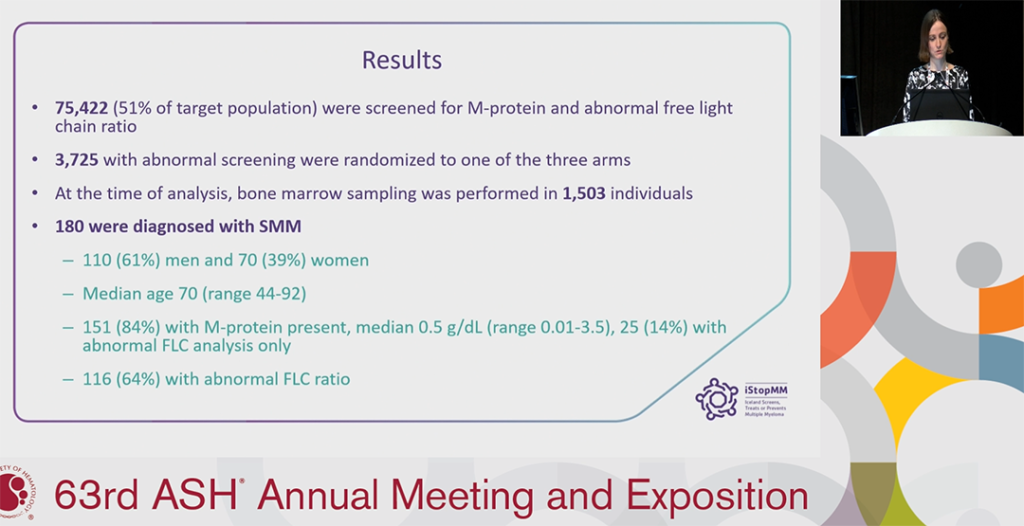
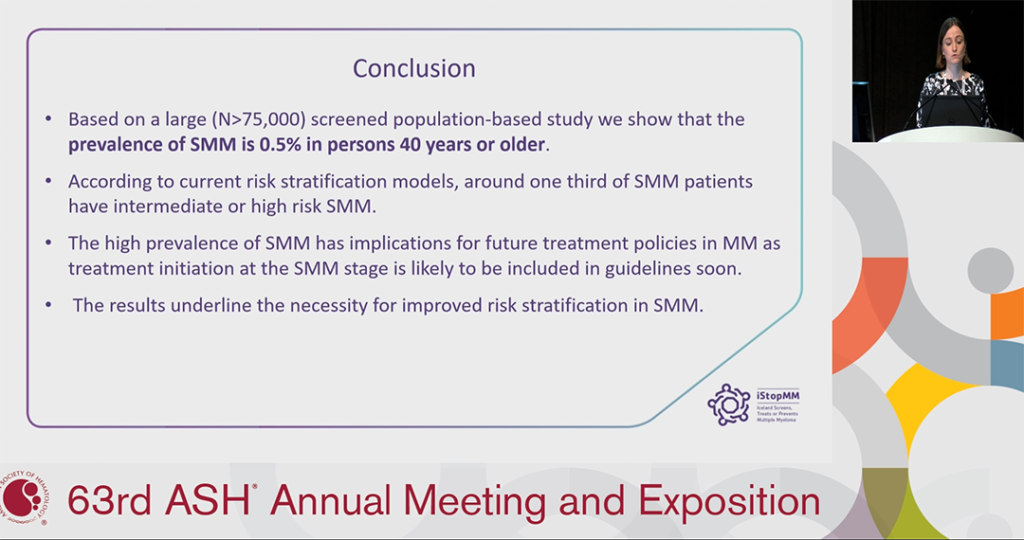
Two trials that screened for MGUS indicated the importance of identifying patients at risk of progression to allow the best likelihood of treatment success. The first results on the IStopMM (Iceland Screens, Treats or Prevents Multiple Myeloma) Study were presented. Incredibly, half of the population over 40 in Iceland was screened for MGUS, and the estimated prevalence of smoldering myeloma was 0.5%, making a case for early detection. Another IStopMM talk showed that the presence of MGUS did not increase the risk of COVID-19.
Additionally, several interesting talks from the lab of Dr. Irene Ghobrial, MD were presented today. Results from the PROMISE Study showed increased incidence of MGUS in high-risk populations. Molecular profiling of circulating multiple myeloma cells can predict disease aggressiveness, and liquid biopsies can be predictors of immune response in high-risk smoldering myeloma. The idea of blood biopsies to detect myeloma is very appealing – who wouldn’t be happy to have fewer bone marrow biopsies!
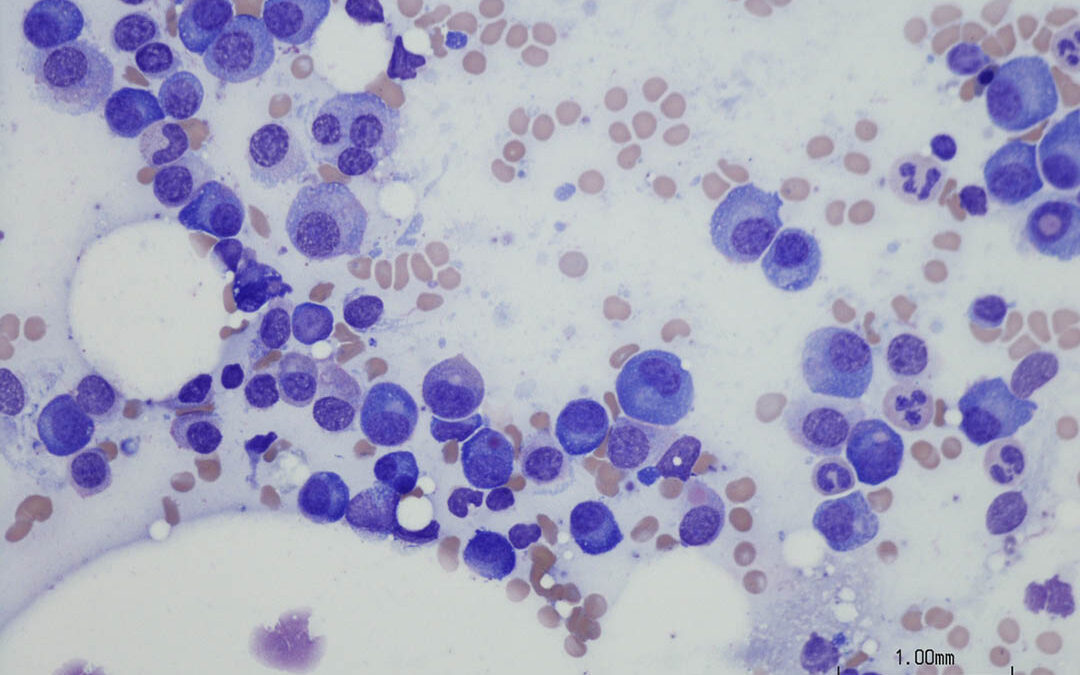
In one final talk from the lab of Dr. C. Ola Landgren, MD, PhD the immune microenvironment in the blood and bone marrow is normalized when there is an MRD-negative response to lenalidomide maintenance. How cool is it that your bone marrow can reboot and normalize after treatment? The bone marrow environment sure is complex but so incredibly amazing!
Even my kitty, Miss Lili, was impressed by all the results we saw today at ASH21. I am hopeful that all these fascinating studies will translate into new therapies for myeloma patients in the future!
Friday was a light day, program-wise. Even so, I was immersed quickly into the bright lights of ASH. I learned a lot by attending an excellent symposium, Adapting Clinical Practice to a Rapidly Changing Therapeutic Landscape in Multiple Myeloma, moderated by Dr. Brian Durie (IMF & Cedars-Sinai), and including myeloma specialists Dr. Jesus San-Miguel (University of Navarra, Spain), Dr. Philippe Moreau (University Hospital of Nantes, France), Dr. S. Vincent Rajkumar (Mayo Clinic, Rochester), and Dr. Thomas Martin (UCSF). This program detailed various case studies along the myeloma continuum.
The first dealt with smoldering multiple myeloma (SMM), which I’ll be focusing on: Evidence for Treating High Risk Smoldering Multiple Myeloma. The definition of high-risk smoldering myeloma (HRSMM) was reviewed, and the details of a case study were outlined. The experts weighed in on whether to treat or not, and if so, how? Interestingly, there wasn’t a consensus about treating, which highlights a challenge those with smoldering myeloma may face. Those who are high-risk can enter treatment through a clinical trial, and possibly off-trial, too, and thus clear-cut decision points don’t exist. The experts highlighted that the rationale for early treatment is either to delay progression or to cure the disease.
Discussion ensued, and it was really interesting to follow along with these specialists as they considered key data points and rationales for one approach over the other. In the end, I came up with these takeaways:
Patients with HRSMM should be followed very closely, approximately every two months, as progression consists of an evolving pattern of change.
Use SLiM CRAB for treatment guidance, as the goal is to treat before active CRAB symptoms are evident.
Progression is hard to capture at the moment, as it happens between visits (see #1 above).
Dr. San-Miguel predicted that the 2 in the 20/2/20 risk progression model may be replaced with .2 in the future.
Although not discussed, the question about who decides treatment in HRSMM arose. Specifically, how much input should patients have, or should the physician decide exclusively? I wish they discussed this.
Dr. Thomas emphasized the importance of gathering and observing trends in key myeloma markers; he wants to see “the movie,” versus individual snapshots.
December 11, Saturday
As the first official day of ASH 2021 began, I had the opportunity to sit in at the International Myeloma Working Group breakfast, where investigators shared some research highlights. This was fascinating as the best in the myeloma world asked questions and discussed recent findings…wow!
I also attended a variety of other presentations. A couple of key points that I’d like to share are as follows:
Results from the iStopMM (Iceland Screens, Treats, or Prevents Multiple Myeloma) project are coming out. If you don’t know about this project, it is really quite amazing! Iceland has been able to screen about half of its adult population (40+ years old, over 75,000 people) for MGUS and SMM, via M-protein and abnormal FLC ratio. The prevalence of SMM in the total population is estimated to be about .5%, with prevalence increasing with age. Of those with SMM, about a third were considered to have intermediate or high risk SMM. Risk was assessed with both the Mayo 20/2/20 model and the Spanish model, which resulted in 55% agreement. They concluded that a need for improved risk stratification exists. A future direction with this data is to continue to follow these individuals, as well as to explore the possibility of familial connections, correlations with autoimmune issues, and psychological outcomes related to knowledge of having SMM.
Early research is looking at the possibility of following smoldering myeloma via liquid biopsies (i.e., from plasma) versus bone marrow biopsies (BMB). BMBs, which are currently the “gold standard,” are invasive and often painful, and thus, are done at diagnosis and then later when other labs show that progression may be occurring. They also tend to be “patchy,” meaning that results are somewhat sample-dependent. Two papers (Garces and Dutta) highlighted the possibility of liquid biopsies, comparing results to BMB. The early work looks promising, so we’ll have to stay tuned in the coming few years on this front.
I’m not finished with Day 1 yet, as I’ll be attending one more oral session and then, at least six poster presentations. My general impressions are that ASH certainly brings the best and brightest together as they shine light in the myeloma space. I’m taking in as much as I can, and I hope that what I share is of interest and value to you!






You must be logged in to post a comment.