As with previous years, the International Myeloma Foundation (IMF) held its signature satellite symposium during that 63rd annual meeting of the American Society of Hematology (ASH). It featured Drs. Brian G.M. Durie (IMF Chairman of the Board), S. Vincent Rajkumar (Mayo Clinic — Rochester, MN), Tom Martin (UCSF Helen Diller Family Comprehensive Cancer Center — San Francisco, CA), Jesus San-Miguel (Clinica Universidad de Navarra — Navarra, Spain), Philippe Moreau (University Hospital — Nantes, France). Absent this year was Dr. Shaji Kumar (Mayo Clinic — Rochester, MN).
The symposium flow included a hypothetical case presentation, followed by how you treat questions and audience vote, the speakers’ case for why they voted the way they voted, and then audience polling to see if the speakers changed any audience minds.
The case studies and presentations ranged from smoldering myeloma to relapsed/refractory myeloma, approved drugs, drug combinations, and drugs in the pipeline.
I noted on the disclosure slides the only one that did not have ANY disclosures was Dr. S. Vincent Rajkumar. Does it mean the others are conflicted, and you should consider their discussions to be biased? Well, NO! I invite you to read this Twitter thread to see why not.
The significant benefit of treating high-risk SMM patients in myeloma is high, noted Dr. San-Miguel, up to 7 years of progression-free survival (PFS) before the smoldering myeloma progressed to full-blown myeloma. Not only was the progression delayed, but the risk profile post-progression was similar to those on the wait-and-watch approach. Dr. Rajkumar indicated the wait-and-watch experiment has failed for high-risk smoldering myeloma patients.
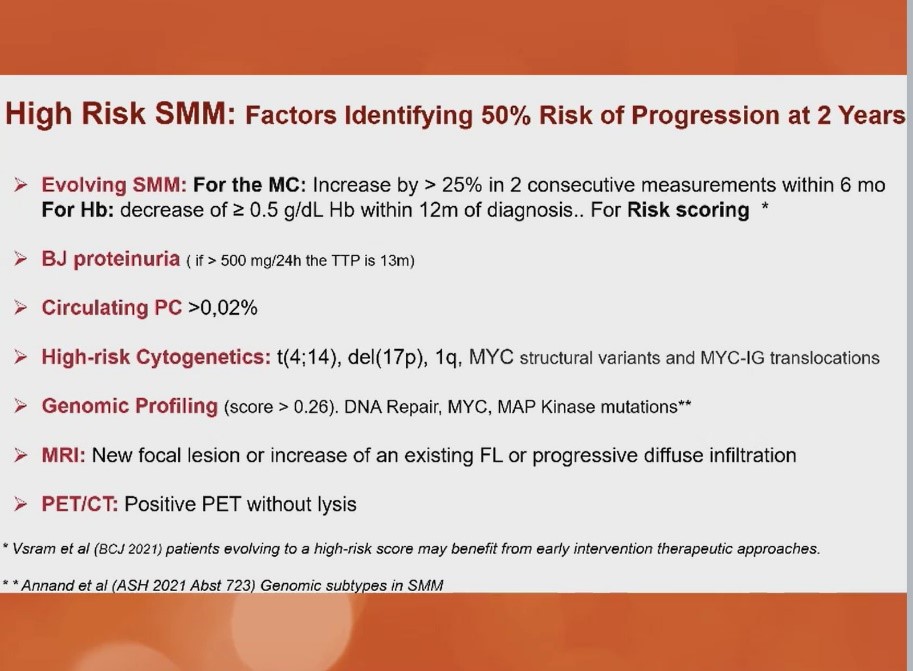
The speakers noted the features that made SMM high risk (seen below), where the presence of these features indicated an up to 50% chance of progressing to myeloma in two years.
Factors Identifying 50% Risk of Progression at 2 Years
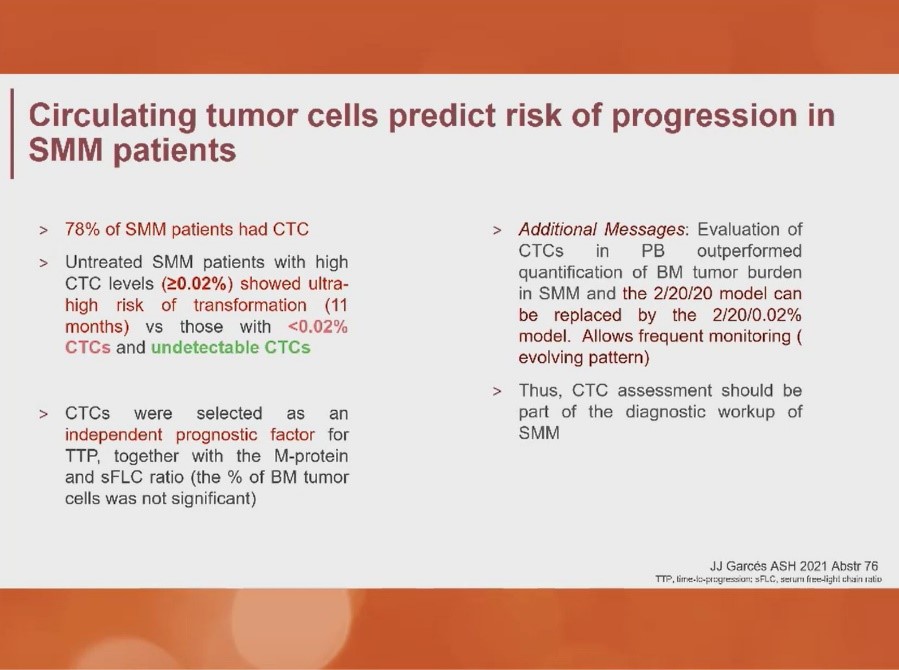
Over the last two years, the researchers consider high-risk indicators have evolved. You may have heard the 2/20/20 model. They are now indicating the potential for the model to evolve to a 2/20/0.02% model allowing for frequent monitoring of the SMM patient and early warning system that the smoldering myeloma will progress to full-blown myeloma. Watch the studies in this area as research has indicated the importance of early intervention pre CRAB.
Circulating Tumor Cells Predict Risk of Progress in SMM Patients
Some exciting questions are being asked: Can CAR T replace upfront high-dose autologous stem cell transplant (ASCT)? Dr. Morreau indicated that a clinical trial is in the design phase in Europe.
Dr. Martin’s wish list for future bispecific antibodies in relapsed/refractory myeloma included outpatient dosing with low cytokine release syndrome (CRS) and neurological toxicity, convenient administration (every 4, 6, 8 weeks). Dr. Martin had a similar wish list for BCMA CAR T cells, including faster manufacturing, better expansion, dual targeting, and outpatient administration.
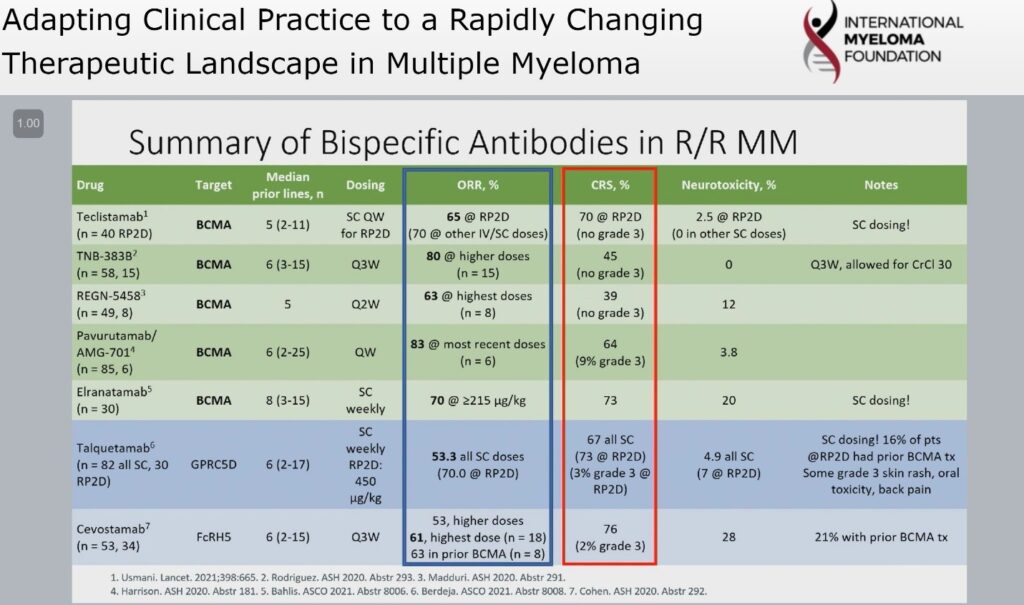
One of the highlights of the symposium was that all the bispecific antibodies for relapsed/refractory myeloma have a single drug overall response rate (ORR) of over 50%, some even 80%. This high ORR was unheard of in the chemotherapy era and even in the age of novel drugs such as Velcade® (bortezomib), Revlimid® (lenalidomide), Kyprolis® (carfilzomib), or Darzalex® (daratumumab).
Summary of Bispecific Antibodies in RRMM
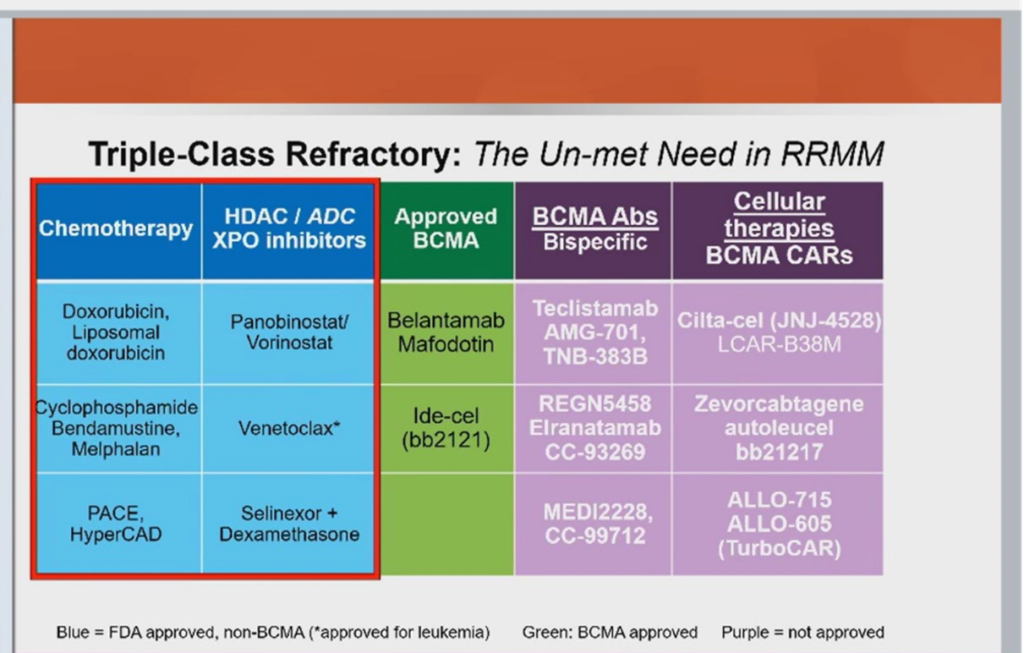
Dr. Durie discussed the unmet need of triple-class refractory myeloma patients. Those patients, despite all efforts, their myeloma continue to progress and eventually die. He indicated the issue is even more exasperated with the withdrawal of melflufen and panobinostat from the market, and the limited use of venetoclax.
The Unmet Needs of Triple Refractor Myeloma Patients
And finally, Dr. S. Vincent Rajkumar of the Mayo Clinic unveiled his “Treatment Algorithm for 2020”. This algorithm embraces the principle of triplet preference, including at least two new drugs (not sure just drugs or if feasible drug classes), consideration of transplant in patients eligible for transplant. He said, “My preference is for people not to use this algorithm and urge patients to sign up to clinical trials.”
During this symposium, I heard the phrases
Flattening of the curve (the survival curve)
Long treatment-free interval (drug holidays)
Ease of administration (at home and subcutaneous administration, treatment intervals of >2 weeks)
Fewer side effects
There was an acknowledgment by the group that more needs to be done to bridge the gap between what the on-the-ground country by country reality is and the potential these new drugs offer.
The IMF teams will be busy at ASH and will be facilitating either virtual or hybrid meetings:
I’m very encouraged by all the abstracts related to bispecifics because they offer a unique way to attack myeloma. As we all know, myeloma is very smart and sly. It continually changes to evade the current treatment and can become more high-risk over time which complicates things even more. Finding new ways to outsmart myeloma becomes ever important as the number of relapses increases.
Ultimately, you never want to run out of lily pads to jump to and this requires novel methods of treatment. Developing new treatments takes years of research and trials before approval is granted.
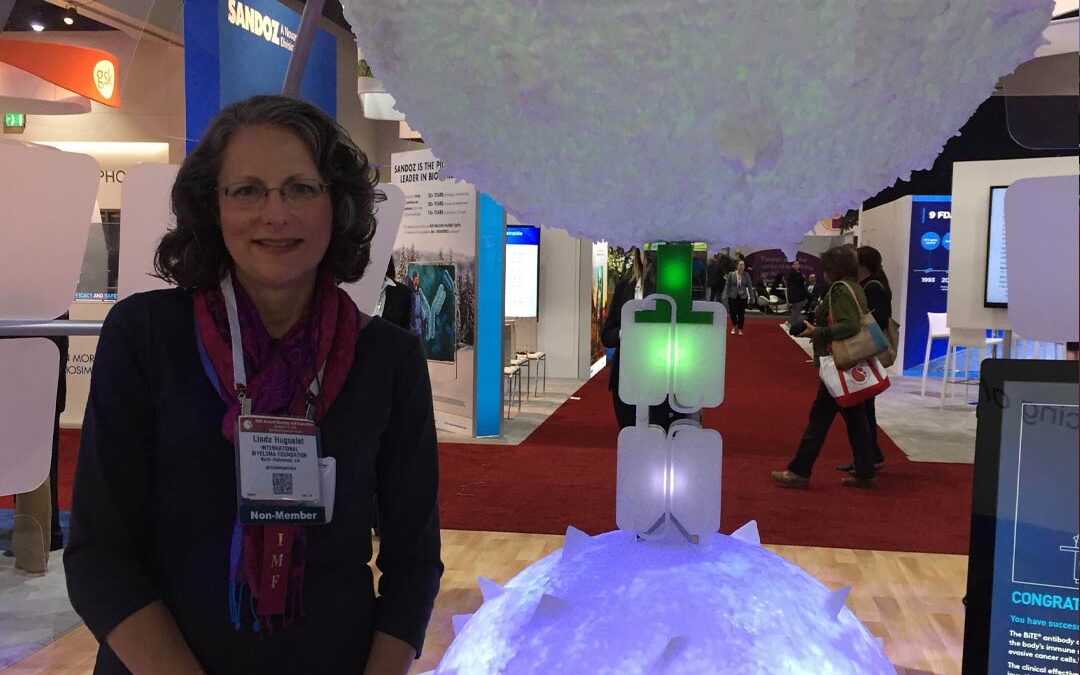
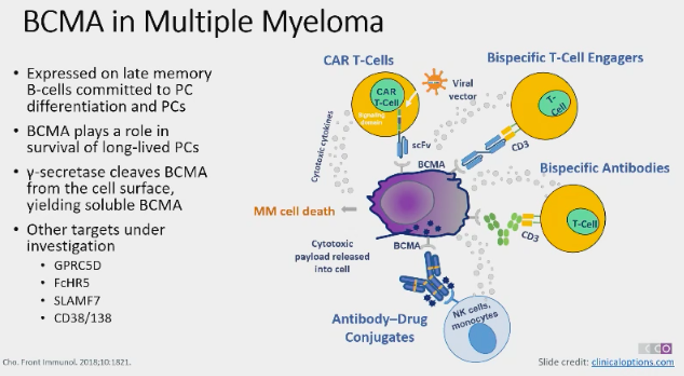
Bispecifics are one of the most promising new ways on the horizon to fight myeloma. They attack myeloma cells in two ways. First, they identify an antigen expressed on myeloma cells, like BCMA. Secondly, they engage your circulating T cells. All this leads the drug into the malignant myeloma cell resulting in cell death. I first remember a large amount of attention on bispecifics at ASH 2018 and all the buzz was on using the BCMA antigen on the myeloma cells.
Moving forward to 2021, BCMA bispecifics are moving forward and there is also a focus on bispecifics that use different antigens, such as GPRC5D, CD3, and FcRH5, and looking at using bispecifics in combination with existing therapies like Darzalex® (daratumumab). Regardless of the antigen, it needs to be widely expressed on myeloma cells and not on your healthy cells.
There is the promise that in 2022, we will see the Federal Food & Drug Administration (FDA) approval of at least one bispecific. Bispecifics, like all treatments, do come with side effects. We’ve all experienced the typical side effects like fatigue, GI issues, and low blood counts, but bispecifics have a side effect most may not be familiar with — Cytokine release syndrome (CRS). CRS is a syndrome that results from the immune cells being activated and releasing large amounts of cytokines into your body. Cytokines are small proteins that help direct your body’s immune response and large numbers of them increase inflammation in the body. Much has been learned about the treatment of CRS and it has shown to be successfully controlled with medications as needed.
This is a new treatment category that you will want to watch for in the coming months and years. I know it will be discussed in the “IMWG Conference Series – Best of ASH 2021” that you can view online beginning on Monday (https://www.myeloma.org/videos/imwg-conference-series-ash-2021) and the International Myeloma Foundation (IMF) has a terrific video series on “Using Your Immune System To Fight Myeloma” which features a segment on how bispecifics work (Myeloma and the Immune System | Int’l Myeloma Fndtn). As always, knowledge is power!
Linda Huguelet, Chattanooga Multiple Myeloma Networking Group
Today was another great day at ASH21, and antibodies (of course) took center stage in my choice of talks to attend.
Darzalex® (daratumumab), again, showed impressive results, this time in the ADROMENA trial for light-chain (AL) amyloidosis — a protein misfolding disease that can also occur in ~15% of multiple myeloma patients. These phase III trial results that were presented by Dr. Raymond Comenzo, MD, showed that the addition of Darzalex to Velcade/Cytoxin/dexamethasone (VCd) induction followed by Darzalex maintenance led to a 60% response rate compared to 20% in the VCd arm.
Most impressively, patients with renal or cardiac involvement showed improvements in organ function in the Dara-VCd arm. This talk was so moving to me because I lost a dear friend to AL amyloidosis years ago, which prompted me to switch my research focus to protein misfolding as a first step towards therapeutic development for protein misfolding diseases. I’m glad that there is now a good therapeutic option, at least for newly diagnosed AL amyloidosis patients.
Bispecific antibodies that targeted other sites besides BCMA have shown impressive results in preclinical and early clinical studies, offering options for patients who do not express BCMA on the surface of their myeloma cells.
Dr. Stefano Sammicheli, PhD, Director at Ichnos Sciences, presented early data on a first-in-class CD47/CD38 bispecific antibody innate cell modulator, ISB 1442. This antibody has two CD38+ epitopes that are distinct from daratumumab to bind myeloma cells as well as a CD47+ epitope to increase destruction of myeloma cells.
The preclinical data is impressive and first-in-human clinical trial enrollment is expected in mid-2022. Dr. Suzanne Trudel, MD presented data on the phase I clinical trial of another bispecific antibody, cevostamab — a FcRH5/CD3 bispecific antibody that facilitates the killing of myeloma cells. The safety profile is concerning, but a step-up dosing procedure seems to help, and it is a good option for relapsed, refractory patients who do not have an established treatment available for them.
Dr. Amrita Krishna, MD presented data on the MonumenTAL-1 Phase I study of talquetamab, a GCPRC5D/CD3 bispecific antibody that showed durable responses that deepened with time. A phase II expansion study is underway.
Additionally, Dr. Ajai Chari, MD presented results of the TRIMM-2 phase Ib study of talquetamab with daratumumab, which showed even deeper responses compared to monotherapy, with no increase in adverse effects. These data show that combination therapies with bispecific antibodies will be a promising future therapy option.
Dr. Sagar Lional, MD, FCAP gave an update on the phase 1/2 trial on iberdomide (IBER), a novel oral cereblon E3 ligase modulator (CelMoD), in combination with dexamethasone. While the overall response rate was low (26%) in this heavily pre-treated population, iberdomide is very well-tolerated with minimal side effects compared to other immunomodulators, likely because only the S isomer is administered so there are no off-target effects from the R enantiomer. The unique mode of action of CelMoDs warms this protein folder’s heart, and I expect to see future combination trials that will likely play an important role in new myeloma treatments.
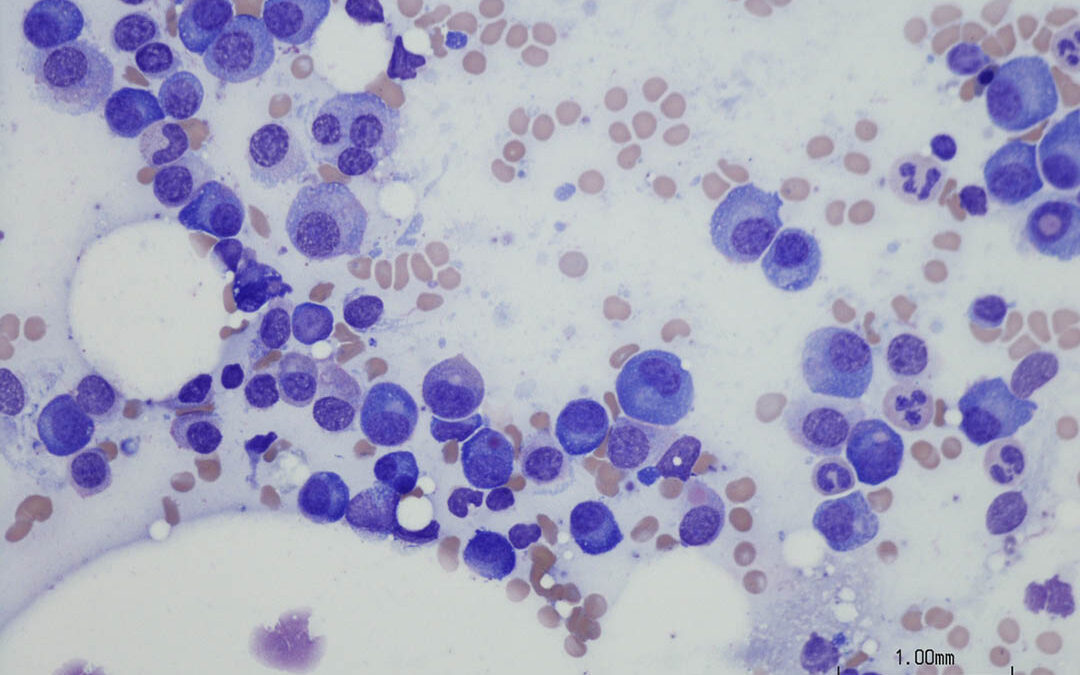
In addition to novel antibody therapies, there were several interesting talks that focused on early precursors to myeloma and detection of myeloma in circulating plasma cells. In all of these talks, I was struck by how amazing the bone marrow environment can be.
Two trials that screened for MGUS indicated the importance of identifying patients at risk of progression to allow the best likelihood of treatment success. The first results on the IStopMM (Iceland Screens, Treats or Prevents Multiple Myeloma) Study were presented. Incredibly, half of the population over 40 in Iceland was screened for MGUS, and the estimated prevalence of smoldering myeloma was 0.5%, making a case for early detection. Another IStopMM talk showed that the presence of MGUS did not increase the risk of COVID-19.
Additionally, several interesting talks from the lab of Dr. Irene Ghobrial, MD were presented today. Results from the PROMISE Study showed increased incidence of MGUS in high-risk populations. Molecular profiling of circulating multiple myeloma cells can predict disease aggressiveness, and liquid biopsies can be predictors of immune response in high-risk smoldering myeloma. The idea of blood biopsies to detect myeloma is very appealing – who wouldn’t be happy to have fewer bone marrow biopsies!
In one final talk from the lab of Dr. C. Ola Landgren, MD, PhD the immune microenvironment in the blood and bone marrow is normalized when there is an MRD-negative response to lenalidomide maintenance. How cool is it that your bone marrow can reboot and normalize after treatment? The bone marrow environment sure is complex but so incredibly amazing!
Even my kitty, Miss Lili, was impressed by all the results we saw today at ASH21. I am hopeful that all these fascinating studies will translate into new therapies for myeloma patients in the future!
In my scientific career as a protein scientist studying protein misfolding, I’ve always been a little protein-centric in my view of biology. It’s a bit ironic because I work at an academic institution that is an RNA mecca, where many of my colleagues are doing amazing research understanding the role of RNAs in biology.
Simplistically, proteins do all the work in the cell. DNA gets all the glory, but RNA is the master regulator controlling the fate of each cell. How exciting it was for me to see proteins (specifically antibodies) playing such a major role in myeloma treatment on this first day of #ASH21!
One of the biggest take-home lessons for me today: Darzalex® (daratumumab) is the current “darling” of myeloma treatment strategies. Maybe I’m being biased because I love proteins, but it was awesome to see proteins as powerhouses of therapy in myeloma. There were many talks that discussed clinical trial data showing daratumumab and other CD38+ antibodies’ increased progression-free survival when added as a 4th agent to standard triplet regimes in newly diagnosed patients or when included as part of a new triplet regimen for relapsed myeloma.
During the International Myeloma Foundation sponsored session on “Adapting Clinical Practice to a Rapidly Changing Therapeutic Landscape in Multiple Myeloma”, there was a related thought-provoking discussion led by Dr. S. Vincent Rajkumar (Mayo Clinic – Rochester, MN) on the importance of shared decision-making between myeloma patients and their myeloma specialists when making decisions about next steps in treatment because of the complexity of issues that each patient faces.
For patients who are refractory to immunomodulators, proteasome inhibitors, and CD38+ antibodies, clinical trial data reported showed BCMA-targeted therapies to be very promising, with response rates of >60% in heavily pretreated myeloma patients. These therapies include FDA-approved CAR T cells and the antibody drug conjugate Blenrep® (belantamab mafodotin), which has a manageable ocular toxicity. Additionally, several bispecific T cell engagers (BiTEs) are anticipated to obtain FDA approval in the next few years. These BCMA-targeted therapies are changing the treatment landscape for relapsed/refractory myeloma and providing new hope.
I found myself thinking a lot about shared decision-making between a myeloma specialist and a patient whenever there is a progression of disease. Making a next therapy decision is a very personal decision — influenced by toxicities, comorbidities, cost, access to care and so many other things. For me, I tend to want to focus on hitting my myeloma hard to prevent the development of drug-resistant clones so I can be around long enough to see my four kids become thriving adults.
I’m grateful that I moved to a combination CD38+ antibody/immunomodulator/steroid therapy line at the very first hint of relapse, right when the pandemic started. I am so grateful for my myeloma specialists, Dr. Muthalagu Ramanathan (UMass Memorial Health Care – Worcester, MA) and Dr. Giada Bianchi (Dana-Farber Cancer Institute – Boston, MA) who have helped me navigate my own therapy decisions.
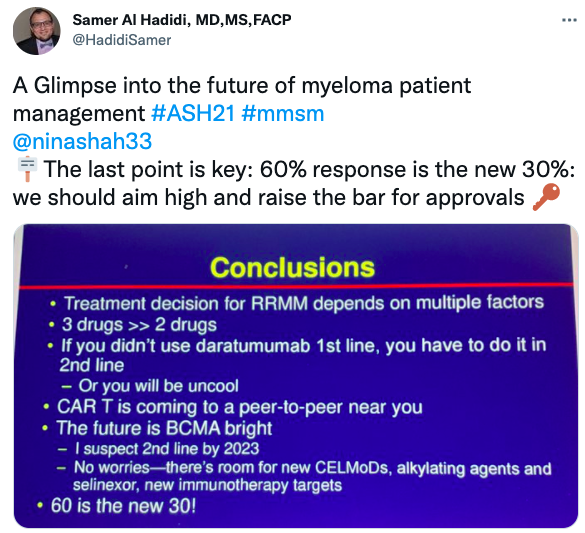
I enjoyed following the #ASH21 meeting on Twitter, including attending my first @TwitterSpace today hosted by Dr. S. Vincent Rajkumar. I also smiled when I read this tweet about a talk by Dr. Nina Shah(University of California – San Francisco, CA) :
I’m glad that my myeloma specialists and I are “cool,” as I am using daratumumab for a 2nd line. I’m also excited about all these other key points about treatment options for relapsed/refractory myeloma, and I am looking forward to learning about other new targets in the pipeline, like CELMoDs and other immunotherapies in the days ahead.
Today, I heard data that made me even more confident about my decision to start a new line of therapy 21 months ago. I learned that circulating tumor cells predict risk of progression for smoldering myeloma patients. I also really enjoyed a talk by Dr. Giada Bianchi which discussed the role of the tumor microenvironment in the progression from MGUS to SMM to myeloma. I enjoyed thinking about how changes in the bone marrow milieu can influence progression of myeloma, and it was striking to me that changes in both protein and miRNA levels were playing a role in this interaction between the bone marrow components and the plasma cells in a way that leads to progression.
Specifically, bidirectional exchange of exosomes (vesicles that deliver lipids, proteins and nucleic acids) between myeloma plasma cells and components of the bone marrow niche supports pathogenesis. As a scientist, it makes sense to me to hit my myeloma hard to limit the development of new myeloma clones, and I’m so grateful that I, so far, have been able to manage the side effects of treatment and to continue teaching that I love.
It seems like proteins are indeed becoming powerful players in the development of new therapies, and new technologies like single-cell RNA sequencing will also help develop new biomarkers and therapies for myeloma patients with aggressive disease.
Today was filled with educational symposiums that offered medical professionals attending the 63rd American Society of Hematology (ASH) conference the opportunity to earn continuing education credits.
For me, it provided a glimpse of what is to come this weekend and it reconfirmed that there are many more treatment lily pads that I can leap to in the future. Thanks to the International Myeloma Foundation (IMF) and our generous sponsors, this is my 9th year attending this conference.
Every year offers great insight into the amazing research that is ongoing to find a cure for multiple myeloma. But some years, I feel like there are more leaps than others. I think 2021 will be one of those years pushing future treatment options to the next level. Bispecific antibodies and CAR T-cell therapies have been featured at previous ASH conferences, but the number of options is reaching a new level and new targets being studied provide more ways to outsmart our continually changing myeloma.
With all this advancement comes more choices — another reason to be an informed patient. There will be a greater need to understand the sequence of treatments. For example, can you take a bispecific antibody before having CAR T-cell therapy if they target the same antigen on the myeloma cell? Recently approved new therapies and several on the verge of approval target BCMA. So, this is a question that will be widely discussed this weekend. And there is literally an alphabet soup of new targets being explored, so the options and combinations continue to explode.
Saturday began at 6:30 a.m. (3:30 a.m. for our team members from the West Coast) with the International Myeloma Working Group (IMWG) meeting and was followed by a day filled with abstracts on all these amazing studies.
Stay tuned to all the information our team will be sharing with you over the next few days.
Linda Huguelet, Chattanooga Multiple Myeloma Networking Group


You must be logged in to post a comment.