

Day 3 of ASH was another whirlwind of talks, and even for this scientist, all the details were beginning to blur together. I heard talks that ranged in focus (1) from understanding the molecular basis of disease; (2) to delineating the role of precursor conditions in myeloma progression; (3) to developing the best diagnostic approaches to track disease; (4) to analyzing clinical trial outcomes in order to measure therapy effectiveness. Throughout the day, I found myself noticing a common theme in these very differently focused talks.
The role of the myeloma patient was very central to all of the talks I attended, whether it was (1) using blood or bone marrow samples from myeloma patients in research; (2) deciding when it makes the most sense to start treatment; (3) pondering whether technologies that measure MRD-negativity would allow patients to stop treatment for a time; or (4) thanking the many patients who participated in clinical trials. Every talk had myeloma patients front and center.
As a patient myself, this perspective brings so much hope, knowing that the research is driven by motivation to help patients like me. It makes me realize that myeloma researchers and clinicians are truly motivated by a desire to improve the quality of life for myeloma patients.
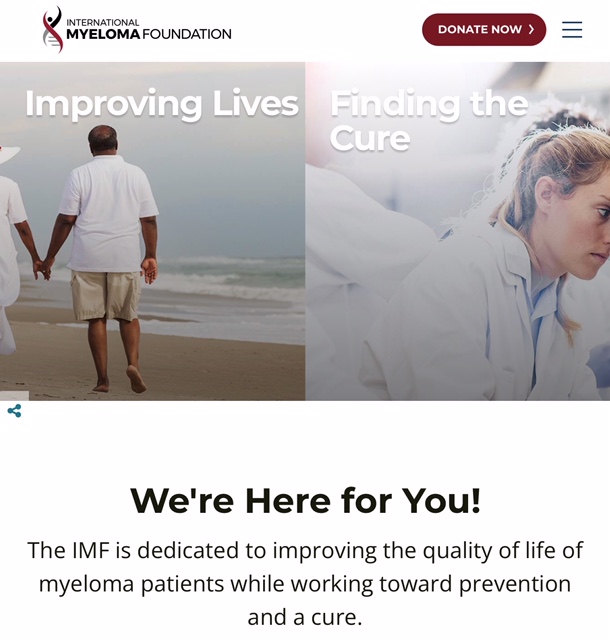
Indeed, the International Myeloma Foundation, who brought me to this conference as a patient advocate, has the phrase, “We’re Here for You!” front and center on their website home page, and I felt that community of support throughout this meeting.
I was also very pleased to learn that #ASH21 has both an Antiracism Studio and a Wellness Studio to help their attendees grow as people. I spent some time exploring both of these studios over the past couple of days. A session on Effectively Engaging Community in Science and Research was a good reminder that, while there has been progress, we still have work to do to ensure that all myeloma patients have access to the best care and clinical trials.
It was good to see several scientific presentations that discussed the inclusion of patients with diverse racial and ethnic backgrounds or patients who were older and frailer. There was also a focus in the scientific questions and answers on the gaps that still needed filling in this area. A session called Ten Minutes to Resilience listed the following critical eight steps: (1) accept change, (2) learn continuously, (3) take charge, (4) define purpose, (5) create balance, (6) cultivate love, (7) reflect, and (8) reframe skills.
Resilience is important for researchers, providers and patients when tackling a challenging disease like multiple myeloma. Our central MA multiple myeloma support group has focused on resilience throughout the pandemic, starting each meeting with a check-in question that focuses on a way we can build resilience. I am so excited to bring back all that I’ve been learning to our group so we can continue to build our resilience as we learn how to manage multiple myeloma together. When we are there for each other, it makes all the difference!
Jill Zitzewitz, PhD, on Twitter @JillZitzewitz
You must be logged in to post a comment.