
Welcome to ASH 2021. This year, it’s hybrid-style! ASH is monitoring the recent discovery of the Omicron variant and is proceeding with a hybrid meeting to include both in-person and virtual options.
I’m grateful to the IMF for deciding months ago that the patients/support group leaders who will be attending #ASH21 will be participating virtually with us. While I will miss connecting with everyone and the excitement brought about by in-person meetings, patient health & safety is always top priority.
Fortunately, we will still be able to attend all oral and poster presentations virtually; we will be reporting to you through blogs and tweets. Please follow all the leaders on this page and search for these hashtags: #ASH21, #IMFASH21, #myeloma #mmsm
My husband Michael and I have had the opportunity to travel with Dr. Brian G. M. Durie and Susie Durie to Iceland in 2018 and 2019 to hear the research updates from the iStopMM team (Iceland Screens, Treats, or Prevents Multiple Myeloma). This is the first large-scale screening study aimed at preventing myeloma before it develops. The first results of the iStopMM screening study were published in May 2021.
There will be four iStopMM oral presentations and an additional two abstracts presented as posters at #ASH21. Dr. Durie outlined them in his recent blog which you can read here.
When we were at the iStopMM meetings in Iceland, Dr. Sigurdur Kristinsson and Dr. Saemundur Rognvaldsson presented an early version of the Tree below. The branches of this iStopMM Tree have certainly grown and as you can see, there are many diverse outcomes. I’ll try to incorporate one or two of these branches in each of my blogs.
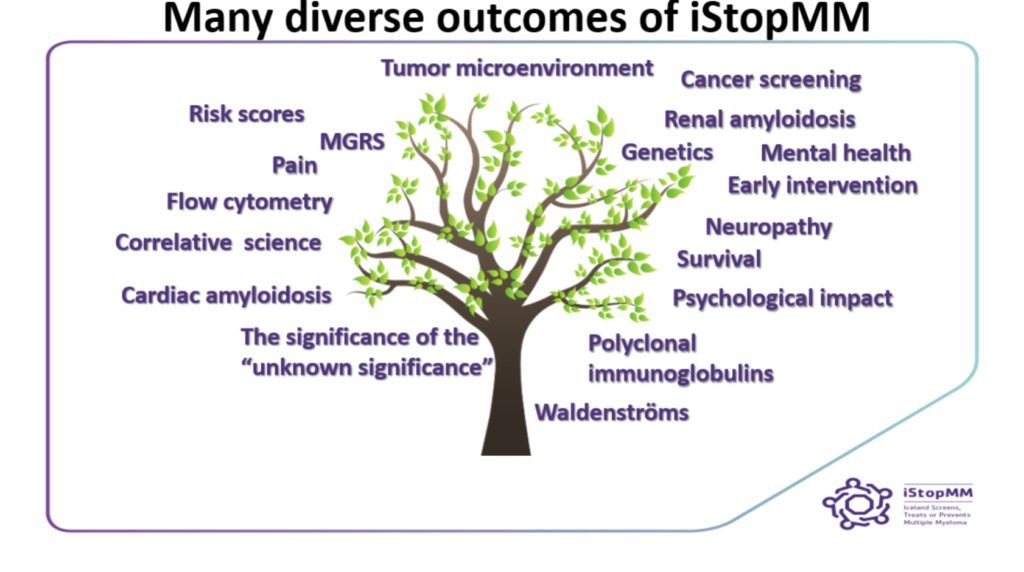
Today, I will go over two branches from the Tree that Dr. Rognvaldsson shared with me:
- Cancer screening – The iStopMM project is a population-based screening where blood samples are collected in a pragmatic and large-scale way. The iStopMM method of collecting samples passively for screening can become a model of cancer screening in the future, especially with the advent of new blood sample-based cancer screening methods.
- Genetics – The iStopMM team is collaborating with deCODE genetics to do a deep analysis of the genetics of tumor cells and the genetics of people who have MM and its precursors. This can help us understand why genes and genetic mutations lead to the development of myeloma. Unique to iStopMM, repeated sampling and follow-up over time will allow us to watch these genetic changes happen from our germline genetical makeup (normal genetic makeup at birth) to the mutations leading to MGUS and then to the development of active myeloma. By understanding this timeline, we will be able to open new avenues in treating and preventing myeloma.
In closing, I will leave you with a calendar of IMF ASH links. Make sure to tune in next week as much as possible:
- Friday, December 10
IMF ASH Satellite Symposium: “Adapting Clinical Practice to a Rapidly Changing Therapeutic Landscape in Multiple Myeloma”
- Monday, December 13
IMWG Conference Series: ASH 2021
(Brian G. M. Durie,MD / Thomas Martin, MD / Maria Victoria Mateos, MD, PhD / Beth Faiman, PhD, RN, MSN, APRN-BC, AOCN, FAAN)
https://www.myeloma.org/videos/imwg-conference-series-ash-2021
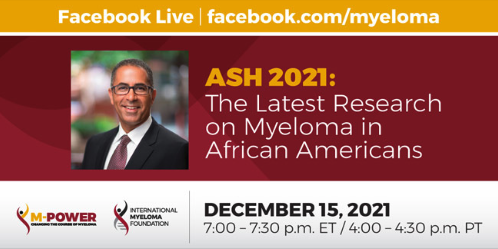
- Wednesday, December 15
Facebook Live / facebook.com/myeloma
ASH 2021 The Latest Research on Myeloma in African Americans (Joseph Mikhael, MD)
- Thursday, December 16
Best of ASH 2021 (Brian G. M. Durie, MD)
https://www.myeloma.org/videos/best-ash-2021-webinar
- IMF ASH Interviews with myeloma specialists: updated daily
- ASH Support Group Leader / Patient Blogs: updated daily
Robin Tuohy, on Twitter: @IMFsupport
You must be logged in to post a comment.