

“When you arise in the morning think of what a privilege it is to be alive, to think, to enjoy, to love…” —Marcus Aurelius, Meditations
This year at the Annual Meeting of the American Society of Hematology (ASH), there have certainly been challenges with technology, whilst holding an in-person meeting and a virtual meeting at the same time. There are presenters and moderators attending virtually from all over the world. This can be stressful for those watching, as well as the technical team, who are behind the scenes.
On Saturday morning, we had one of those technical issues which prevented us from hearing a presentation. While waiting for the issue to be resolved, I found my way (virtually) to the ASH Wellness Studio to look for a relaxation or meditation program. I was very excited about what I found.
Dr. Kulvi Kaur presented a fascinating program about how stress affects gene expression associated with inflammation and longevity. Meditating 15 minutes a day increases the expression of genes associated with longevity and reduces the expression of genes associated with inflammation.
Dr. Kaur also presented a program on how a regular yoga/meditation practice can improve longevity and prevent cognitive decline. I found this fascinating, especially since I struggle with “chemo brain.” One of the suggestions was to practice Kirtan Kriya — a meditation technique of chanting and finger movements. Try it for yourself.
Another simple method to relax and improve your mind is breathing. It’s free and powerful and easy. We do it every day, automatically, without thinking. But if we take a few minutes of our day to concentrate on our breath, it is a great self-help tool. Here is one method: Inhale through the nose for a count of 4, then exhale through the nose for a count of 6-8. Repeat this pattern for a couple of minutes.
“The chronic stress that is associated with shallow breathing results in lower amounts of lymphocyte, a type of white blood cell that helps defend the body from invading organisms, and lowers the amounts of proteins that signal other immune cells. The body is then susceptible to contracting acute illnesses, aggravating pre-existing medical conditions and pro-longing healing times.” — John Luckovitch, Integrative Breathwork Facilitator
ASH ‘s annual meeting is filled with updates on clinical trials and research on ways to treat multiple myeloma. These doctors and researchers work so hard to find the best ways to treat and possibly cure myeloma.
The ASH Wellness Studio addresses the need for self-care among these attendees. This information can also be used by patients to help our bodies and minds cope with the challenges of being a multiple myeloma patient.
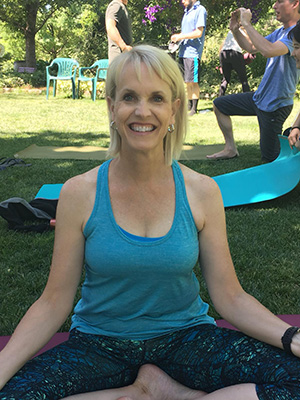
Sheri Baker, on Twitter @blondie1746
You must be logged in to post a comment.