
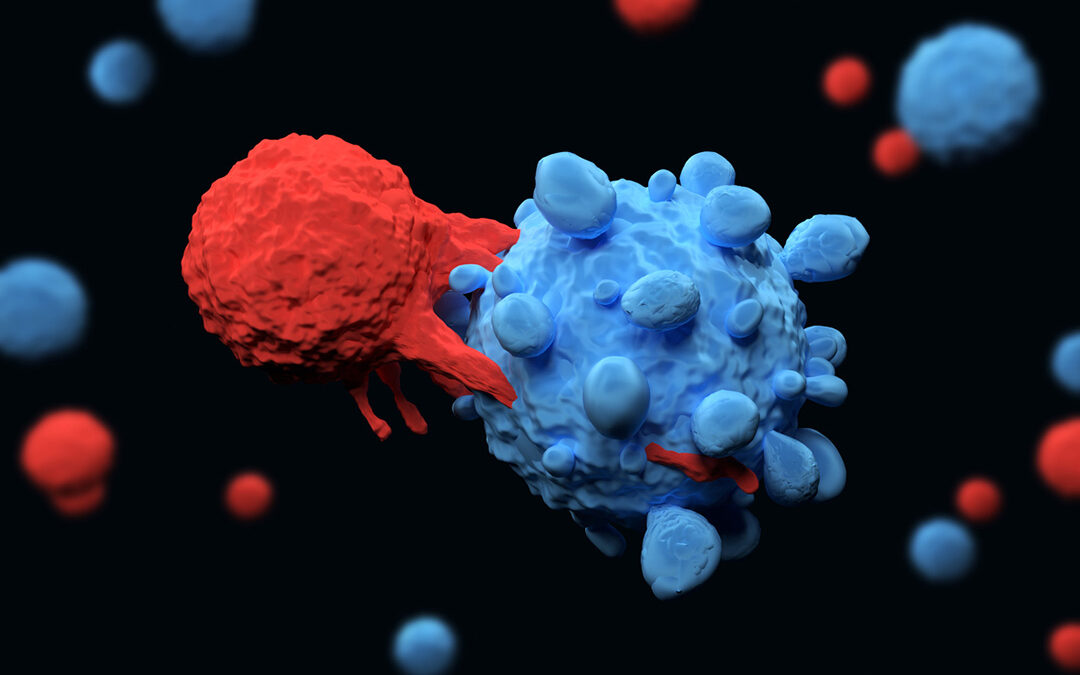
The last few years, I have been interested and hopeful in the number of types of immune therapies. Immunotherapies aid our own immune systems to help fight infections and attack cancer cells. We want our immune systems to function as normally as possible to find and destroy abnormal cells to possibly prevent or slow the growth of many cancers, including myeloma.
However, we all know that myeloma is smart and tricky. Myeloma cells have ways to avoid the immune system’s ability to destroy them due to genetic changes that make myeloma cells less visible to the immune system.
Dr. Mikhael has created a series of videos to help us better understand:
- What is B-cell maturation antigen (BCMA)
- What are Antibody Drug Conjugates (ADCs)
- What is CAR T-Cell Therapy
- What are Bispecific Therapies
You can view these helpful videos HERE.
Harnessing the power of our own immune systems to work best and help it to do what it’s supposed to do is smart science! Bispecifics act as the bridge connecting the T-cells to the myeloma cell. The T-cell then kills the myeloma cell, as it recognizes it as an abnormal cell. These bispecifics are what are sometimes referred to as “off-the-shelf.” This is different than the CAR T immune therapies, whereby a patient’s own T-cells are harvested and then sent to a lab to be re-engineered and then given back to the patient.
This process takes time and the challenge of what does a patient do while waiting for treatment, plus can a patient even get CAR T? We have heard that cancer centers only have a certain number of spots for patients waiting for CAR T. Hopefully, this shortage of spots opens soon to enable more myeloma patients to have access to CAR T.
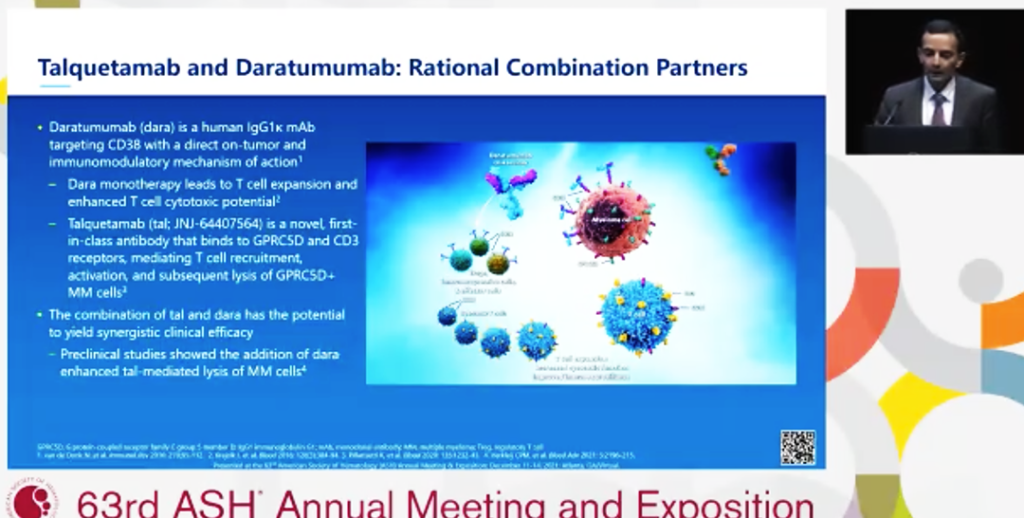
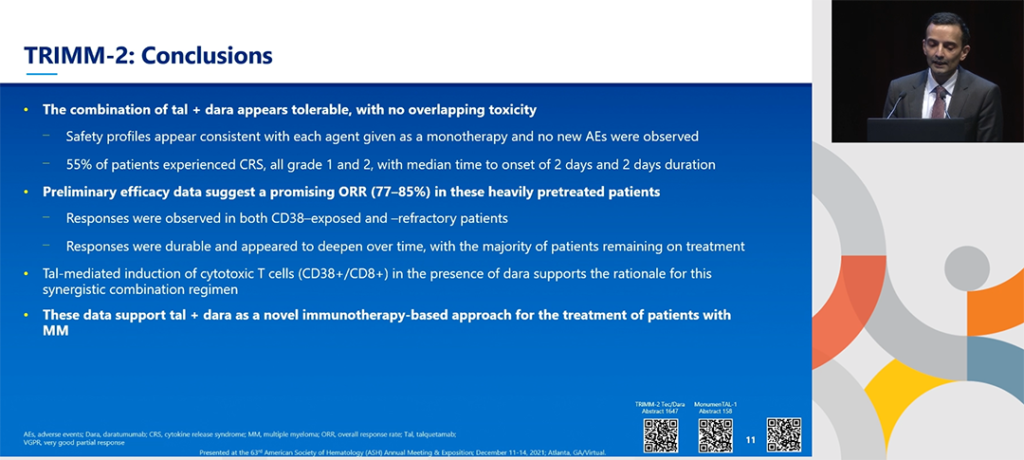
On Saturday afternoon, we listened to Abstract 161 on “Phase 1b Results for SubQ Talquetamab Plus Daratumumab in Patients with Relapsed/Refractory Multiple Myeloma (RRMM)” by Dr. Ajai Chari (Mount Sinai — New York). This bispecific is a little different because instead of targeting B-cell maturation antigen(BCMA), it targets G protein-coupled receptor, class C group 5 member D (GPR5CD). This is important for patients who have already had multiple BCMA targeted therapies, because it’s a different target to go after besides BCMA. More Targets = More Hope!
Here are a few slides on SubQ talquetamab plus dara:
The title of today’s blog is “I Hope Myeloma BiTES the Dust” and here’s my song for you to enjoy by Queen:
Michael Tuohy, on Twitter @IMFmikeMYELOMA
You must be logged in to post a comment.